Lockdown notes on working, living and loving from the Far East
As the national lockdown gradually ends across China and the Far East, many professionals are starting to pick up the pieces of their lives and getting back to work. But it isn’t quite the same again.
16 April 2020· 6 min read· 1 comments
TL;DR
Observing post-lockdown trends in the Far East, this article offers critical foresight for global business leaders navigating an evolving professional landscape. A key insight reveals a profound re-evaluation of employee priorities; individuals increasingly place personal safety and family ahead of traditional career progression, even declining opportunities. This challenges long-held work ethics and the notion of work as a defining identity.
Compounding this is the "perpetual presence of anxiety," stemming from widespread uncertainty regarding job security, market conditions, and a return to normalcy. Leaders must acknowledge these evolving values and pervasive anxieties. Understanding these shifts provides a vital early warning, urging businesses to adapt strategies, foster flexibility, and cultivate resilience to thrive in a profoundly redefined future of work.

How long will this phase last? This question is on everyone’s mind, as a global pandemic alters life and work in ways that we hadn’t imagined. A national lockdown, the new work from home routine, and uncertainty around when will our lives get back to some semblance of normalcy are now a part of our reality.
But what about the other omnipresent question: How will this end? Whether it will be a happy or sad ending is beside the point. For much would have changed forever when it does.
To search for clues, I called a few colleagues in China and the Far East. Based out of Shanghai, Beijing, Hongkong and Singapore, they had lived through the COVID-19 experience, and are just about picking up the pieces of their lives and are getting back to work. Their reality now may hold breadcrumbs to what our future may look like.
Some fascinating pictures of their lives started to emerge, after the first set of conversations on Zoom, Of course, some of it can be easily explained by the differences in countries, cultures, mindsets and ways of working. But the scars they sported from their fight against the virus could be a precursor of what we might go through as well.
Here are five broad recurring themes, brought alive both by vivid in-person accounts and the patterns that emerged from the conversations.
1. Work does not define me
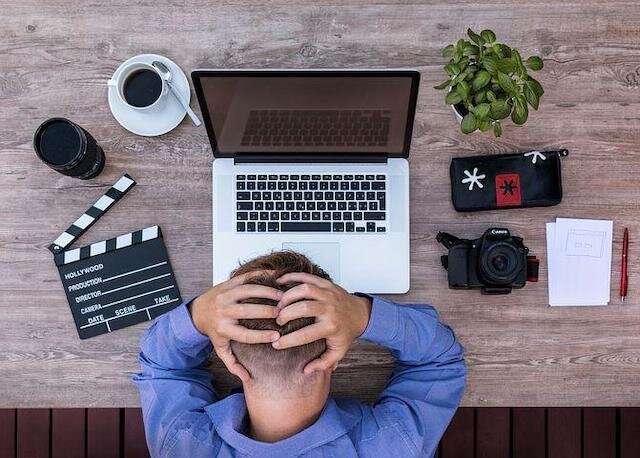
[Career and work used to be the identity. Now, people aren’t sure. Photo credits: Lukas Bieri on Pixabay]
Work and career progression remain an integral part of societies in the East. Last year, when Jack Ma, the founder of Alibaba, advocated the 996 Rule (996 for 9 AM to 9 PM, six days a week!), it became a subject of conversation.
If work and success at work were priorities that superseded all else, the virus has placed this ethic under scrutiny. Suddenly, work and career are no longer defining elements of their lives.
COVID19 and the lockdown coincided with holidays for the Chinese New Year. A staggered lifting of the lockdown forced businesses to scramble, start all over again and look to cover lost ground. This often meant employees had to either relocate or travel to new destinations. Stories were told of employees declining to travel and relocate and often refusing to bite the bait on promised career promotions.
Employees are demanding more space and staggered hours to avoid over-crowding even in the canteen. They are placing personal safety ahead of career and work. This is a change, says Ivan, an HR professional from Hong Kong. "Career and work used to be the identity. Now, I am not sure.”
"Boxed in at home while partaking of responsibilities perhaps has brought alive new realisations,” says Ivan. In the long-distance race called life, priorities of the family and needs of the self, have reduced the huge lead that career always enjoyed.
2. The perpetual presence of anxiety
Anxiety was a thread that bound all conversations. This anxiety was ushered in by the tearing apart of every known playbook.
How long will it last? Don’t know!
When will normalcy return? Don’t know.
When will the company go back to “normal production”? Don’t know.
Will there be job losses? Will I get increments? Will clients rescind contracts? When will schools reopen? DON’T KNOW!
There was a certain orderliness and predictability to life. Led by the rule book, mediated by technology, great change was possible. While building massive highways and brand-new hospitals in a matter of days, the invisible virus has eluded the grasp of governments, societies and scientists!
Sue Lim, a leadership coach put it well. "This uncertainty has put under the spotlight, the degree of certainty that we were all used to. Our devices removed uncertainty for us. From the weather to local traffic, our sensors, cells and algorithms worked hard to keep our uncertainties at bay. Our innate ability to deal with the unknown stands eroded and the devices that provided certainty are yet to figure out the virus.”
The end result: The perpetual company of anxiety!
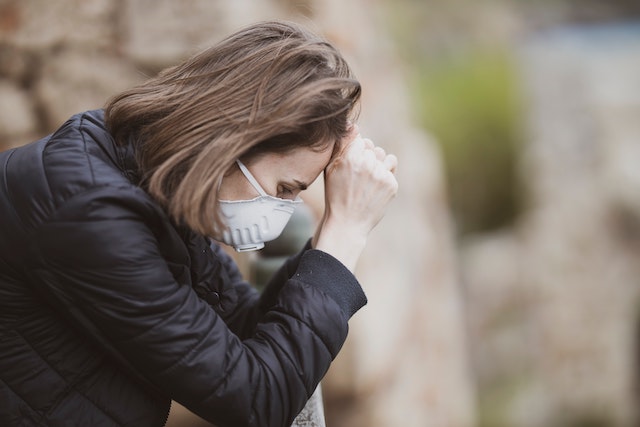
[Wearing masks and ample caution, and gingerly stepping out of home is a new normal. Photo Credits: Engin Akyurt on Unsplash]
"An anxiety that first started when temperature guns were pointed at random intervals and readings were taken, when we were still getting used to people being infected or killed by the virus."
Others spoke of the strong cocktail of negative news, gloom and doom all around and the complete absence of any outlet for their anxieties. "No music. No parties. No walks. No trips on the train.
“But the most difficult to deal with was how to contact other humans only through a screen. That was really, really, tough. That brings anxiety now, when we get out of home,” said Lily, a senior human resource professional, based in Beijing.
Wearing masks and ample caution, and gingerly stepping out of home is a new normal. Looking up with a start and searching the moment someone in the room coughed! The steady company of anxiety seems like a given. Its presence matched by a stoic acceptance that we are helpless in dealing with the virus and must go about living our lives.
3. Personal spaces disappear
The focused time with family has meant relationships have come to a head. Sharing confined spaces for long durations of time also lead to the evaporation of 'hiding spaces'. There has been a discovery of each other and each other’s worlds. Colleagues have discovered families and families have discovered the family member's work.
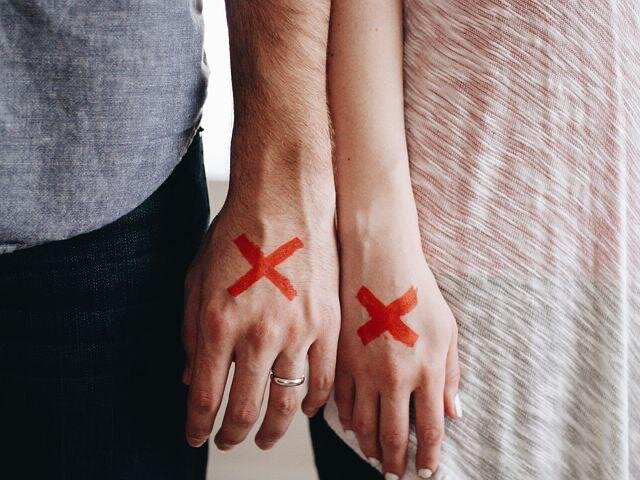
[The forced boxing in with no escape routes has caused family ties to shift. Photo Credits: Nicholas Gercken on Unsplash]
One particular conversation about personal spaces stayed. "Everything was a constraint: from the television to internet bandwidth to laptops. Of course, I didn’t have laptops at home for their use. Suddenly, we had to share and make space. Often times, the toilet was the only place I could take a call peacefully from,” said Ivan. “I was so glad to sit across the table after we got back to work and sit at my table. After a long time, I didn’t have to share it with anyone else,” said Lucy.
Across mainstream media, there’s a growing number of stories about the increase in domestic abuse and divorce rates. We also heard other revealing personal accounts. Accounts of how personal relationships shifted. "My husband reworked a less than perfect relationship with his mother,” said a colleague.
"I rediscovered my husband of several years,” says Sue Lim. "I discovered his job and how different he is while he is speaking with his clients. We had a chance to sit down and talk. Sometimes, I was glad. At other times, not so much!"
The forced boxing in with no escape routes has caused family ties to shift. "When we got back to work, people wanted to speak so much. We were sitting across the table, but everyone wanted to speak,” said Lucy. "Even the quietest ones.”
4. Where have the smiles gone?
"People are kinder. They want to know how they can help," said Eva, a head of human resources. "There is more empathy in general because for once, there is a view that everybody is in the same boat. Income, education, social status, all have a new common denominator: COVID19! So, people are ready to contribute and lend a helping hand.”
But the smiles are gone. For one, people are generally far more anxious. How far you stand away from another person now needs to be calibrated. And sometimes it can get worrisome. The number of permits that need to be sourced to move about and the process of working on it seems a tedious affair. The uncertainty, the gloom and perpetual wariness have robbed smiles, says Sue Lim.
There is yet another angle to it: you can see that people don’t smile only when they are not wearing their masks! Masks are omnipresent. And that makes reading people’s expression rather hard. The leadership coach in Sue spoke when she said, "There was a time when I had to peer through people's masks. The metaphorical ones. Now there is one more additional mask. A physical one at that. You can imagine, what it does to trust, in general."
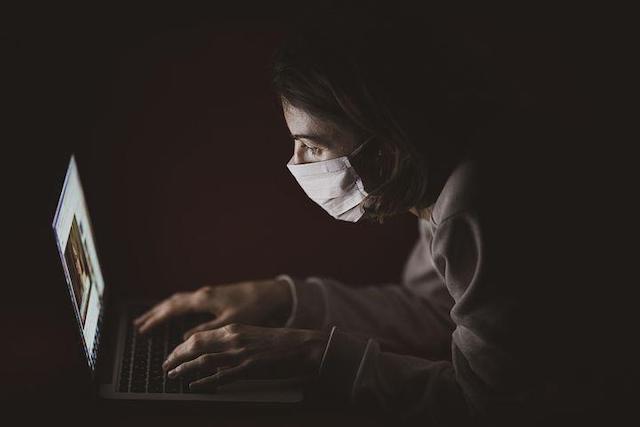
[Masks are omnipresent. And that makes reading people’s expression rather hard. Photo Credits: Engin Akyurt on Unsplash]
5. The death of whimsy
Long duration lockdowns have meant people now plan every part of their lives. "We had very limited time to step out and had to get a number of things within that time. Everything was planned. The same applied at home too. I had to coordinate calendars to slot kids’ classes, my client engagements and other priorities. There just was no space for slack. Life, in general, has become planned and methodical.” said Sue.
The many weeks of lockdown has infused new ways of living with more emphasis on planning and efficiency. The whimsical stroll, the catch up with a friend, the random 'ordering in" and other spontaneous acts are now snatches of luxuries.
We heard acts of 'planned spontaneity'. Look into your phone book, find someone who you haven’t spoken to in a long while and place a call. Ivan says, “It's not quite like the good old times, but nothing is quite like the good old times. These are new times to work in.”
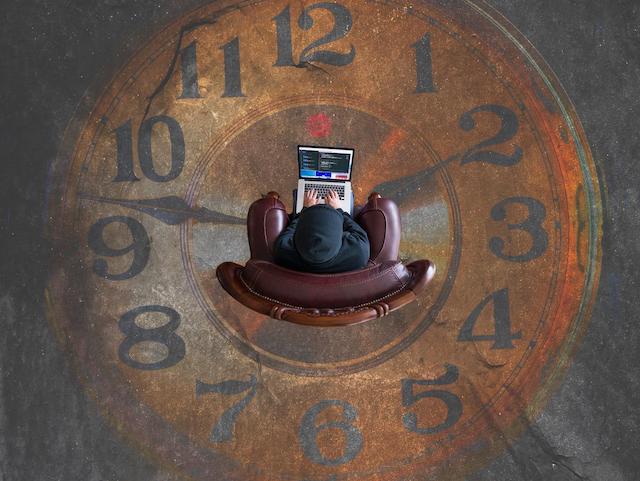
[Life in general has become planned and methodical. Photo credits: Kevin Ku on Unsplash]
Lost opportunity
Listening to them and their stories of life then was utterly engrossing. Almost like seeing the future in fast forward. Yet much later, reading between the lines, one could sense an undertone of missed opportunity. An undertone that seemed to suggest that they didn’t see it coming for 'this long'.
"We lost perspective of time. We have learnt a few things by default, by rote, if you will. If we had known that we were going to be locked down for this period, perhaps we could have better planned to learn a few new habits,” said Sue. And then, she added wistfully, "Maybe you people can.”
So, here’s a piece of parting advice: The shutdowns aren’t going away in a hurry. Think of specific habits you want to inculcate and build it into your routines. Perhaps it was the leadership coach in her speaking, but you could sense the palpable energy in her voice, when Sue quotes Rahm Emanuel, "Never let a serious crisis go waste.”
(All names of people quoted here have been changed to protect their identity)
Still curious?
- Don't miss #KaapiWithKavi, a Twitter conversation where Kavi answered questions around work and life during the lockdown and after.
Listen to organisational learning expert @_Kavi as he invites you to a conversation here at 3 PM today around the theme of his recent story https://t.co/PJV8yBJOIX.
— Founding Fuel (@FoundingF) April 19, 2020
Post your questions; pls tag @FoundingF, @_Kavi & #ThrivingInVolatileTimes. (Music: https://t.co/pyck5fbVYC) pic.twitter.com/fWsOhJIlnH
Join the conversation
Kavi Arasu
Works at the intersection of people, systems, and organisational change
Kavi Arasu works at the intersection of people, systems, and organisational change. His work has taken him across multinational corporations and high-growth enterprises in India and internationally, giving him a grounded view of how transformation actually plays out, as opposed to how it gets described in strategy decks.
Over the last decade, his work has centred on partnering with CEOs and senior leadership teams through business transitions, digital transformation, and cultural change. He has supported leadership transitions, post-M&A cultural integration, and the kind of long-term stewardship of values that rarely gets noticed until it's missing. AI is now one strand of that work. Leaders are trying to work out what it changes and what it doesn't, and that question sits comfortably inside the change problems he has spent decades on.
He runs Flyntrok, an advisory practice built around change challenges that rarely arrive with instructions. He also teaches at a leading business school and speaks at leadership forums internationally. He used to run long distances. These days he runs Flyntrok instead, which he maintains is no less demanding.
He works very closely with the core team at Founding Fuel on learning and change initiatives and is a regular contributor. He lives in Mumbai, a city he finds well suited to thinking clearly amid constant motion.
Beyond the noise is the signal.
FF Insights: Sharpen your edge, Monday–Friday.
FF Life: Culture, ideas and perspectives you won't find elsewhere — Saturday.
Founding Fuel is sustained by readers who value depth, context, and independent thinking.
If this essay helped you think more clearly, you may choose to support our work.

Founding Fuel is sustained by readers who value depth, context, and independent thinking.
If this essay helped you think more clearly, you may choose to support our work.
Loading comments...


Readers also liked

·Work, Careers & Personal Mastery
WFH Daily #185: Quit like a freak
September 24, 2020: Why some decisions are essentially a flip of the coin; Home cooking during the lockdown; India’s gas sector—the art of working at cross purposes; Why Amazon matters
FF

Founding Fuel
WFH Daily #185: Quit like a freak
September 24, 2020: Why some decisions are essentially a flip of the coin; Home cooking during the lockdown; India’s gas sector—the art of working at cross purposes; Why Amazon matters

·Work, Careers & Personal Mastery
WFH Daily #176: The art of speaking effectively
September 15, 2020: Chris Anderson on public speaking; Mahesh Vyas on the lockdown’s impact on women’s employment; Michael Sandel on why we need to debate how we reward key workers
FF
Founding Fuel
WFH Daily #176: The art of speaking effectively
September 15, 2020: Chris Anderson on public speaking; Mahesh Vyas on the lockdown’s impact on women’s employment; Michael Sandel on why we need to debate how we reward key workers

·Work, Careers & Personal Mastery
Working From Home Daily #1 - 70
June 1: Learn to negotiate... with kids, get the sequencing right for digital education, prepare yourself for post-lockdown
FF
Founding Fuel
Working From Home Daily #1 - 70
June 1: Learn to negotiate... with kids, get the sequencing right for digital education, prepare yourself for post-lockdown
Explore more
Dive into other themes from our network.