·Economy, Policy & Society
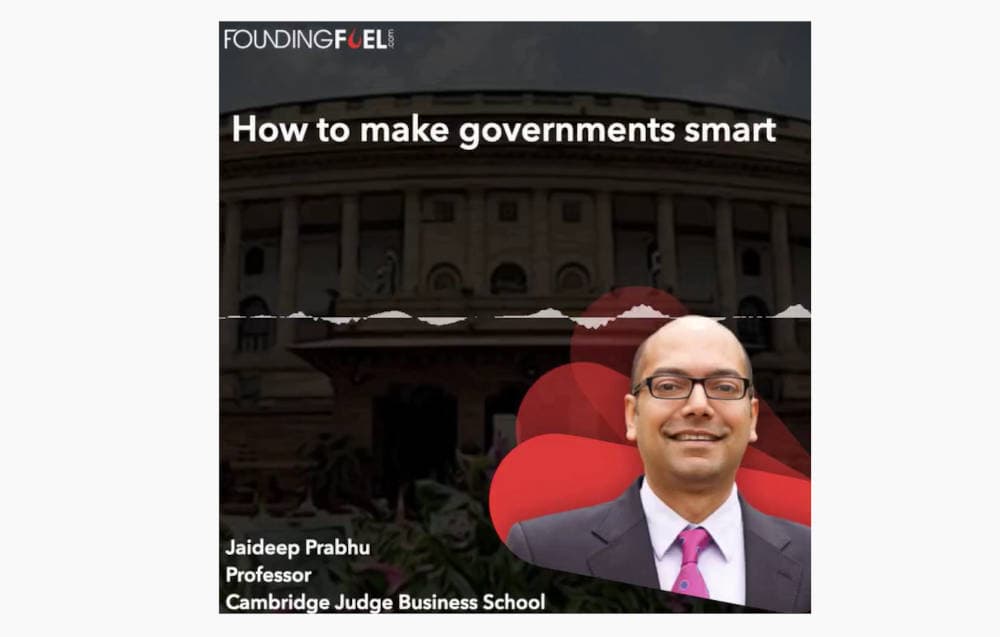
How to make governments smart
A podcast with Jaideep Prabhu, professor at Cambridge Judge Business School and author of ‘How Should A Government Be? The New Levers of State Power’
AU
Author
Manish Sabharwal has been watching what’s going on in the economy, in the society, and in the government from multiple vantage points. He talks about the possible scenarios and how business—and indeed the country—will need to sequence and calibrate their response
As chairman of TeamLease and member of the board of Reserve Bank of India, Manish Sabharwal is well-placed to see what’s unfolding from a business and a policy perspective.
In a conversation with some members of Founding Fuel and former Tata group veteran Satish Pradhan, Sabharwal says, it is tough to model how business will behave in the coming weeks and months. “The first input in a GPS is not where you are going, it’s where you are.” Response will vary based on whether the lockdown lifts on April 15 (for corporate India, that will be like just having a skinned knee), continues beyond May 1 (a broken leg), or continues beyond May or June (akin to an amputation for many employers). In the last scenario, the response shifts to the realm of policy.
Having said that, don’t forget that “everything you do to murder the virus is going to murder the economy”. Another truth here is that customers, and not shareholders or lenders, pay the salaries. So, according to Sabharwal, the right sequence of response is, first deal with the virus, then deal with poor citizens, then deal with the economy, then deal with employers and then deal with the financial system.
Is there a possibility of green zones and red zones for businesses to operate in? Sabharwal reckons not. Because supply chains, including people supply chains, are national. So, it would be hard to maintain green zones, because economic distress in red zones would migrate to green zones.
In all this, the COVID-19 crisis has also brought home a few other truths:
A few positive shifts are already visible though:

Founding Fuel is sustained by readers who value depth, context, and independent thinking.
If this essay helped you think more clearly, you may choose to support our work.

Founding Fuel is sustained by readers who value depth, context, and independent thinking.
If this essay helped you think more clearly, you may choose to support our work.
FF Insights: Sharpen your edge, Monday–Friday.
FF Life: Culture, ideas and perspectives you won't find elsewhere — Saturday.
A podcast with Jaideep Prabhu, professor at Cambridge Judge Business School and author of ‘How Should A Government Be? The New Levers of State Power’
Author
A podcast with Jaideep Prabhu, professor at Cambridge Judge Business School and author of ‘How Should A Government Be? The New Levers of State Power’
Author
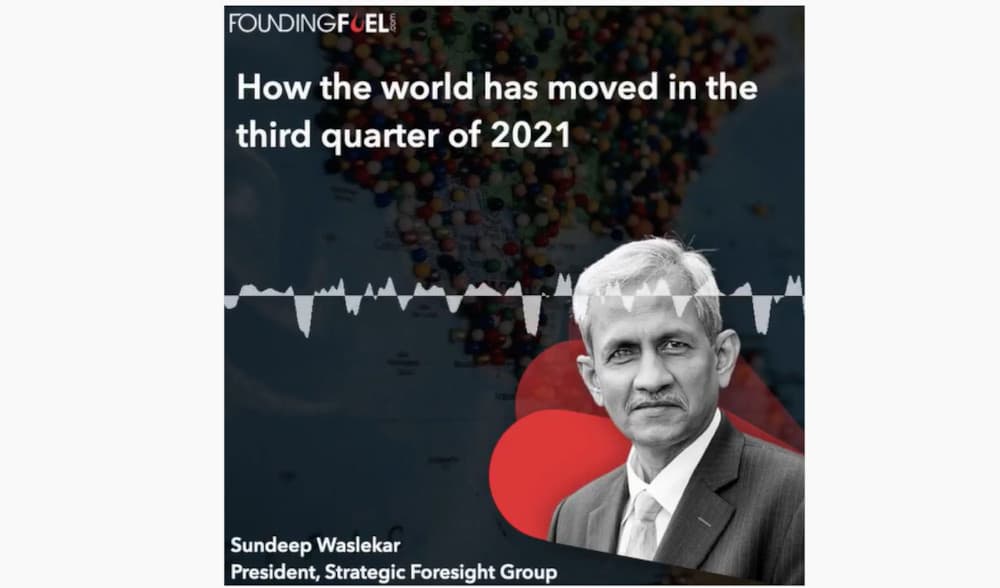
Sundeep Waslekar offers a nuanced view of the push and pull that is shaping the world around us
Author
Sundeep Waslekar offers a nuanced view of the push and pull that is shaping the world around us
Author
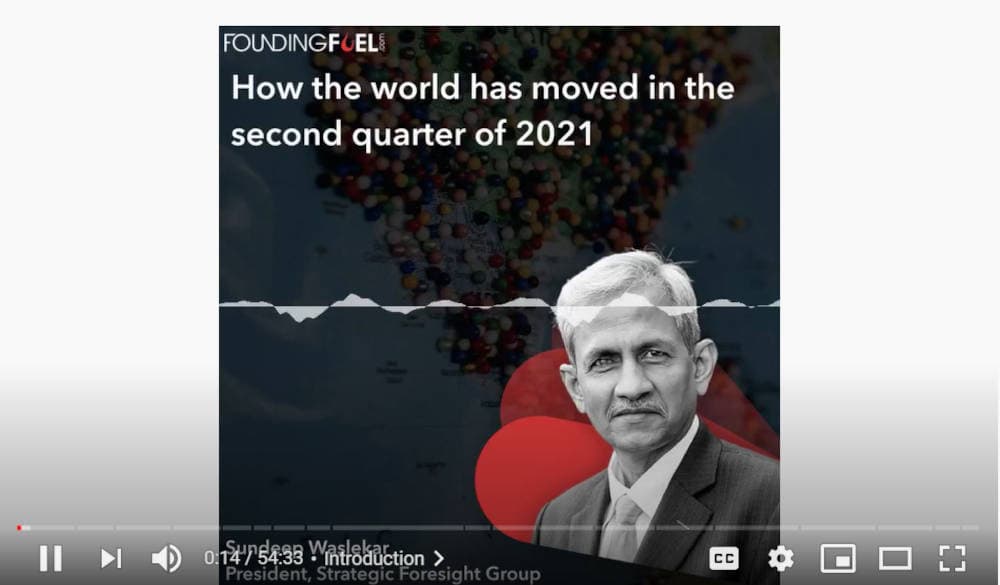
The April-June quarter saw Biden making significant diplomatic moves vis-a-vis Europe, Russia and China; the Middle East saw two significant elections in Israel and Iran; China showed ascendancy in space; and there are developments in India’s neighbourhood, especially in Afghanistan. Sundeep Waslekar deciphers the implications
Author
The April-June quarter saw Biden making significant diplomatic moves vis-a-vis Europe, Russia and China; the Middle East saw two significant elections in Israel and Iran; China showed ascendancy in space; and there are developments in India’s neighbourhood, especially in Afghanistan. Sundeep Waslekar deciphers the implications
Author
Dive into other themes from our network.