
The necessity of curators
As the noise gets louder, curators double down on their efforts to focus on the essentials
8 September 2019· 3 min read
TL;DR
In today's cacophonous information landscape, effective curatorship is a strategic imperative for business leaders. This article compellingly argues that true curators transcend simple compilation; they are vital architects of clarity. They create value by synthesizing complex themes into actionable insights, filter the signal from the noise with objective discernment, and ultimately lead by focusing on core essentials that drive strategic direction. For business audiences, cultivating and leveraging these curatorial skills is paramount to navigating information overload, making informed decisions, and maintaining a competitive edge. It's about discerning what truly matters and strategically guiding others towards it amidst endless data.

Dear friend,
On Friday evening, I spent a little while speaking on the phone with an editor at a daily newspaper in Delhi. I hadn’t heard from her in a while or seen her posts on any social media platform either. Polite to a fault, when we finally spoke, it turns out, she is busy. Her days and nights are now spent sifting through public archives to curate a collection that places in perspective the life and times of a leader she thinks is important because his thoughts matter now more than ever.
Now, why must she work as hard? Because what does a curator have to do?
Popular perception has it that curators are people who surface compilations of noteworthy thoughts or lists of what they think are good pieces of work. But this is an absurd assumption. Because in a noisy world where everyone imagines themselves as content producers, algorithms included, curators play some crucial roles.
1. They create: It is one thing to surface what is important. But to sift through the most important themes of our times, focus on what matters most, summarise why it matters, and offer pointers on how to navigate a theme intelligently, is what makes them creators. This is what my colleague NS Ramnath does through his weekly newsletter on technology. May I urge you to look up his most recent one here and subscribe to it here?
2. They filter: There are books. But they are reviewed, often subjectively, rarely objectively. Add to these reviews on ghastly platforms where even the uninformed can make or break a book with random ratings. Fact is, it takes an experienced curator to sift through what matters to an audience on themes they must pay attention to. That is why at Founding Fuel, we place a premium on the summaries D Shivakumar, president (corporate strategy and business development) at Aditya Birla Group, writes. His most recent one on It’s the Manager is a case in point. For that matter, what he pointed to as must-read business books in December 2018 is another case in point.
3. They lead: What binds all curators is that as the noise gets louder, they double down on their efforts to focus on the essentials. Their voices then are that of outliers. There is much to be learnt from curators. They lead. Away from the noise.
My very best,
Charles Assisi
Featured Stories
The long play

[Photo from ISRO]
When news broke that Chandrayaan 2 could not complete one of its missions to land on the moon, over a billion Indian hearts broke. But NS Ramnath digs from history and pulls out an anecdote as recounted by former President APJ Abdul Kalam, an old ISRO hand, on why this ought not be viewed as a failure. (By NS Ramnath. Read Time: 5 mins)
Bosses need to be coaches
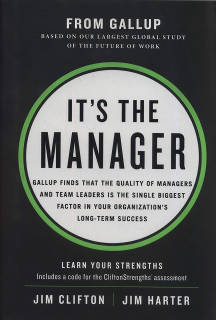
Insights from Jim Clifton and Jim Harter’s book ‘It’s the Manager’. The book is based on the largest global study by Gallup on the future of work. (By D Shivakumar. Read Time: 7 mins)
Finding the CEO in you

Elena L. Botelho, bestselling author of ‘The CEO Next Door’ and partner at leadership advisory firm ghSMART, explains why most people misunderstand what it takes to get the corner office. (From CKGSB Knowledge. Read Time: 7 mins)
What We Are Reading
You 2.0: Decide Already!
Podcast | Shankar Vedantam of NPR in conversation with psychologist and author Dan Gilbert about where we go wrong in making our predictions and how we can use this research to lead happier lives.
Farsighted: How We Make the Decisions that Matter the Most
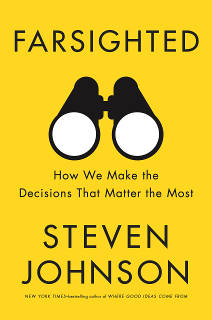
Books | Best-selling writer Steven Johnson draws from multiple disciplines to make a case that everyone thinks we are living in an age of short attention spans. But we've actually learned a lot about making long-term decisions in the last few decades. He draws on lessons learnt from domains as diverse as cognitive science, social psychology, military strategy, environmental planning, and great works of literature.
From Our Archives
The culture that led to Isro’s world class capabilities

[A multi-spectral image of Doha, Qatar, taken on June 26, 2017, by Isro's Cartosat 2 series satellite. Source: ISRO]
ISRO’s achievements in earth observation are one outcome of this culture of working without silos. (By N Dayasindhu)
Six people who can help you become a superforecaster
In his new book, 'Superforecasting’, Philip Tetlock looks at those who get it right and how they do it. (By N S Ramnath)
Dan Ariely’s advice for decision making: Understanding our minds

In this interview with Dan Ariely, the author of 'Predictably Irrational' and 'The (Honest) Truth about Dishonesty' discusses our mental frailties and how they can help with our decision making in the modern world. (From CKGSB Knowledge)
Join the conversation
Founding Fuel aims to create the new playbook of entrepreneurship. Think of us as a hub for entrepreneurs- the go-to place for ideas, insights, practices and wisdom essential to build the enterprise of tomorrow. It is co-founded by veteran journalists Indrajit Gupta and Charles Assisi, along with CS Swaminathan, the former president of Pearson's online learning venture.
Beyond the noise is the signal.
FF Insights: Sharpen your edge, Monday–Friday.
FF Life: Culture, ideas and perspectives you won't find elsewhere — Saturday.

Founding Fuel is sustained by readers who value depth, context, and independent thinking.
If this essay helped you think more clearly, you may choose to support our work.

Founding Fuel is sustained by readers who value depth, context, and independent thinking.
If this essay helped you think more clearly, you may choose to support our work.
Loading comments...




Readers also liked

·Leadership & Organisation
The One Leadership Skill We Forgot to Teach
In an age of noise, overload and drifting meetings, facilitation is no longer a “tool”, it’s a core leadership discipline
KA

Kavi Arasu
Leadership and Talent Development Professional
The One Leadership Skill We Forgot to Teach
In an age of noise, overload and drifting meetings, facilitation is no longer a “tool”, it’s a core leadership discipline
Leadership and Talent Development Professional

·Leadership & Organisation
FF Daily #398: Why leaders need an ethical lens
June 15, 2021: Ram Charan on why operating within the boundaries of law is necessary, but not sufficient; What Vishy Anand really means; Twitter: India & Nigeria; [Song] It’s Okay
FF

Founding Fuel
FF Daily #398: Why leaders need an ethical lens
June 15, 2021: Ram Charan on why operating within the boundaries of law is necessary, but not sufficient; What Vishy Anand really means; Twitter: India & Nigeria; [Song] It’s Okay

·Leadership & Organisation
Change: From idea to action
Kishore Biyani’s Retail 3.0 strategy, the art of selling, and why pain can be good and necessary
FF
Founding Fuel
Change: From idea to action
Kishore Biyani’s Retail 3.0 strategy, the art of selling, and why pain can be good and necessary
Explore more
Dive into other themes from our network.