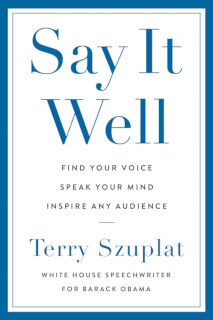
Say It Well
By Terry Szuplat

Insights from the book ‘Say It Well’ by Terry Szuplat, Barack Obama’s speechwriter
By Terry Szuplat
Terry Szuplat is a sought-after speaker and speechwriter. He worked in Barack Obama’s speechwriting team in the 8 years Obama was US president. He also worked for other notable leaders in the US government.
I spent so many years helping President Obama and other leaders speak in their own voice that, over time, I lost my own voice.
When Obama’s presidency was over, I left the White House and tried putting myself out there more—doing interviews and speaking.
I was fortunate to write for Obama all the 8 years. It was the most exhilarating and uplifting, and at times exhausting and terrifying, experience of my professional career.
The art of public speaking needs an upgrade—a new guide for our diverse and changing world.
I never read a book on public speaking before I became a speechwriter.
While we can learn from a gifted orator like Obama, I believe we can also learn by listening to each other.
You will see why the lessons of this book can work for you too—no matter who you are or to whom you are speaking.
The first step of giving any good speech is believing that we can. It’s believing that your voice matters and that we deserve to be heard.
A fear of public speaking is one of the most common phobias of the world.
When I started, I did what most of us do. Instead of being confident in who I was, I too often focused on what I wasn’t.
The starting point of effective public speaking for all the speakers I find persuasive is they have a good sense of who they are and what they believe.
After college, Obama had the opposite problem—not a lack of confidence, but perhaps too much.
Obama was an effective speaker because he knew who he was.
One of the first things I work on when I start a speech is “what should I say”?
A speech is not an essay we write for class. In such cases we write ten sentences when four would do the job.
A speech is not a white paper, a study in an academic journal or a report written by policy experts full of data, stats and figures.
A speech is not a press release. A speech is not a news article. A speech is not a book—a long story with twists and turns.
A speech, like any other performance, has a lead. When you do the speech, you are the lead.
The golden rule of public speaking is: Speak in a way that sounds natural to you.
A good speech connects the two brains of the speaker and the listener.
I have the 50-25-25 rule: Spend 50% time researching, thinking and organizing my thoughts; 25% time writing the speech; and 25% of time editing and practicing.
When Obama would meet us to brief us, he would always start by asking “what's the story we are trying to build?” He wanted to make sure that we got the story right.
If you want to be a good speech maker, you need to be a good researcher. You have to do your homework.
Obama once said, “I am a better speechwriter than my speechwriters.” It was tough to hear it, but it was true. If you remember any of your favourite Obama speeches, chances are he wrote most of it himself.
Good speeches can be boiled down to 3 things: a beginning, a middle, and an end.
The purpose of your opening on any speech has to be to establish an emotional connection with your audience.
Statistics rarely change anyone’s mind, but deployed right at the beginning of your speech, they can hook your audience.
The more a group perceives a threat, the more they will work together. Leaders use vivid language to describe the threat and unite people.
One of the things we learn from social psychology is that when people feel threatened, they neither change nor listen.
Tapping into the shared identities of our audience doesn’t just feel good, it can help get things done.
Early in your presentation or speech, you have to get to the point. Many people waste too much time.
Tapping into values is not just a way to connect with your audience, it’s also a great way to persuade them.
Research has shown that statistics can make your audience less likely to support a worthy cause. They might not give to a large cause but might give to a specific challenge of helping one child.
Wharton professors Jonah Berger and Katherine Milkman studied 7,000 news articles and found that readers were more likely to share articles that trigger strong emotions like awe, anger or anxiety.
We are drawn to language that stirs us, that makes us feel something.
Getting personal and being vulnerable is one of the most effective ways to emotionally connect with your audience.
Speakers like CEOs, Alan Greenspan, Timothy Geithner have what we call an affliction. It’s called the curse of knowledge. They assume that the audience possesses the same vocabulary as them.
Greenspan will say: “We will find the particular calibration in the timing to stem the acceleration…” If everyone in your audience understands technical language, please use it, else do not use in your speech.
|
Instead of |
Just say… |
|
Align |
Coordinate |
|
Core competencies |
Capabilities |
|
Incentivize |
Motivate |
|
Interdependent |
Connected |
|
Leverage |
Harness |
|
A paradigm shift |
A change |
Good speakers think of how words sound when we say them out loud.
I used to write for the eye—for words to be read. Bob Boorstein, President Clinton’s speechwriter taught me that a speech is like a good song, it should have words that are nice/easy to hear.
A good song has a beat, a tempo. Similarly, a good speech has cadence.
“You campaign in poetry, but govern in prose” - Mario Cuomo, former Governor, New York.
Speeches are an auditory experience; your audience is listening to you. Poets are told to pinch the words till they hurt. There’s an elegance and grace to language.
Tim Sharot, the neuroscientist, has spent years studying hope. Hope is very powerful.
We as individuals overestimate the likelihood of good things happening to us and underestimate bad things happening to us.
Hope is a leading predictor of success.
Hope is about goals, willpower and pathways.
As speakers we feel a tension between being substantive and being brief.
In being substantive, we speak too much.
In being brief we worry that we are not substantive enough.
You don’t have to talk a lot to say a lot.
A speech is like a performance and like any performance, it must be rehearsed.
By Terry Szuplat
Operating Partner | Advent International
Shivakumar is Operating Partner at Advent International. Before this, he was President (Corporate Strategy and Business Development) at Aditya Birla Group. Earlier assignments include: Chairman & CEO at Pepsico India and prior to that, Managing Director at Nokia India. Before joining Nokia, he worked with consumer electronics maker Philips and top consumer goods firm Hindustan Unilever. He is an engineer from IIT Chennai and an MBA from IIM Calcutta.
Shivakumar has written three books: Reflections - a collection of Shivs articles; The Right Choice - Resolving Ten Career Dilemmas; and The Art of Management. The latter two are business bestsellers.
FF Insights: Sharpen your edge, Monday–Friday.
FF Life: Culture, ideas and perspectives you won't find elsewhere — Saturday.

Founding Fuel is sustained by readers who value depth, context, and independent thinking.
If this essay helped you think more clearly, you may choose to support our work.

Founding Fuel is sustained by readers who value depth, context, and independent thinking.
If this essay helped you think more clearly, you may choose to support our work.
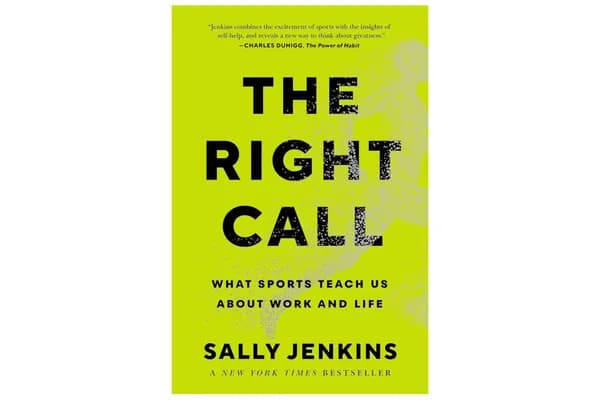
Insights from sportswriter Sally Jenkins’ book ‘The Right Call: What Sports Teach Us About Work and Life’

D Shivakumar
Operating Partner | Advent International
Insights from sportswriter Sally Jenkins’ book ‘The Right Call: What Sports Teach Us About Work and Life’
Operating Partner | Advent International
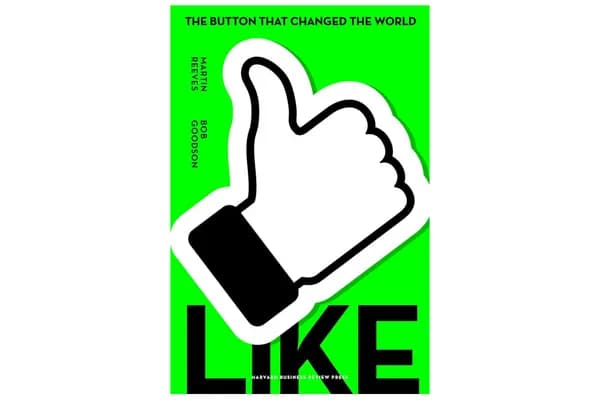
Insights from Martin Reeves and Bob Goodson’s new book, ‘Like’
D Shivakumar
Operating Partner | Advent International
Insights from Martin Reeves and Bob Goodson’s new book, ‘Like’
Operating Partner | Advent International
Insights from The Economist’s report ‘The World Ahead 2025’
D Shivakumar
Operating Partner | Advent International
Insights from The Economist’s report ‘The World Ahead 2025’
Operating Partner | Advent International
Dive into other themes from our network.