The Triggers
By Marshall Goldsmith & Mark Reiter
Insights on how to change behaviour from Marshall Goldsmith and Mark Reiter's book Triggers: Sparking positive change and making it last
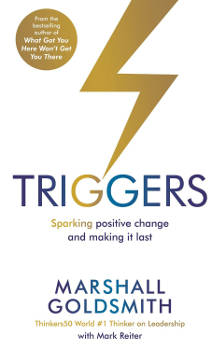
By Marshall Goldsmith & Mark Reiter
A trigger is any stimulus that reshapes our thoughts and actions, says Marshall Goldsmith, one of corporate America's pre-eminent CEO coaches.
Our environment is the most potent triggering mechanism in our lives - and not always for our benefit.
Because environmental factors seem out of our control, we might feel like victims of circumstance, puppets of fate. DON'T ACCEPT THAT.
We want to be somebody , a type of person and we have a big regret when we don't get there.
Regret is the emotion we experience when we assess our present circumstance and reconsider how we got there.
If I do my job properly here and you do your part then two things will happen :
a. You will move closer to becoming the person you want to be and
b. You will have less regret.
Meaningful behavioural change is very hard to do.
No one can make us change unless we truly want to change.
Overconfidence, stubbornness, confusion, resentment, procrastination, that's a lot of heavy baggage to carry on our journey of change.
The environment sometimes lets us compromise between our sense of right and wrong. In the competitive workplace, it can happen to solid citizens.
Feedback - both the art of giving and taking it - is our first step to become smarter. In some cases the feedback itself is the trigger.
A feedback loop comprises four stages - evidence, relevance, consequence and action.
It is logical, it follows a pattern, it is within our control, it is something we can repeat. Good leaders do it.
| Counter Productive | Productive | |
| Encouraging | Temptation Distraction Pleasure |
Praise Recognition Admiration Money |
| Discouraging | Isolation Disrespect Ostracism Peer pressure |
Punishment Rules Fear Pain |
We are superior planners and inferior doers.
The most effective leaders vary their style to suit the situation-that is situational leadership.
Effective leaders do not breathe down their team's neck; they know when to step in, when to give freedom and when to let their team get on with the job with a light touch.
Forecasting involves anticipation, avoidance, adjustment.
"Half the leaders don't need to learn what to do, they need to learn what to stop" -- Peter Drucker
It takes enormous self power to stop doing something enjoyable.
The real test is sacrificing something we enjoy doing - like micro managing in the case of leaders. The leader believes it is working for him and doesn't hurt his career, but it will hurt his reputation and the commitment he gets from his team. This is a big derailer for many leaders.
| Preserving | Eliminating | |
| Creating | Inventing Improving |
Adding Eradicating |
| Accepting | Maintaining Making peace |
Reducing Delaying |
Creating is innovating, preserving is not losing sight of your core business, eliminating is shutting off loss making things and processes.
In a meeting, everyone in the room has the same set of data points. It is the role of a good CEO to read the data with dispassionate clarity.
Non-acceptance of data and the situation triggers more bad behaviour.
Accepting is most powerful when we are powerless to make a difference.
When we bluntly challenge ourselves to figure out what to change and what we cannot, we surprise ourselves with the bold simplicity of our answers.
Apologizing is a magic move. Only the hardest of hearts will fail to forgive a person who admits they were wrong.
So is asking for help - it sustains the change process, keeps it moving forward.
Optimism is another magic move.
| Passive | Active | |
| Positive | Professional | Committed |
| Negative | Cynical | Hostile |
Self discipline is about achieving desirable behaviour, self control is about avoiding undesirable behaviour.
A coach is a good source of mediation, a bridge between the visionary planner and the poor doer in us.
A good coach is like a good high school teacher - teaching, supporting, inspiring and occasionally instilling some healthy paranoia to keep us surging ahead.
A reason we resist coaching is our need for privacy and another reason is we don't know what we need to change.
"Our mission in life should be to make a positive difference, not to prove how smart we are." - Peter Drucker
Every decision in the world is made by the person who has the power to make that decision. Make peace with that.
If you don't you will be frustrated
We do not get better without structure. Structure is a disciplined way of doing things, like running a meeting, like communicating regularly, and so on.
Imposing structure on our daily schedule helps us be more effective.
If we have enough structure, we don't need to impose discipline.
Dealing all day with difficult, high-maintenance colleagues is energy depleting.
Trying to convince people to agree with you when they are inclined to oppose you is energy depleting.
Fully motivated people don't need help finding the discipline and structure to get things done. Good enough is not in the vocabulary of truly motivated leaders.
Skill and adding to the skill base is the beating heart of high motivation.
We miss the direct connection between low skill and low enthusiasm until someone points it out to us.
We also underestimate the quality of our goals. Average goals beget marginal effort, as evidenced in new year resolutions.
A professional shoots for the highest standards, an amateur settles for good enough.
We are professionals at what we do, we are amateurs at what we want to become.
When we prolong negative behaviour, the kind of behaviour that hurts everyone, we lead a changeless life!
Marshall Goldsmith with Mark Reiter
Buy on Amazon
Buy on Flipkart

Founding Fuel is sustained by readers who value depth, context, and independent thinking.
If this essay helped you think more clearly, you may choose to support our work.

Founding Fuel is sustained by readers who value depth, context, and independent thinking.
If this essay helped you think more clearly, you may choose to support our work.


FF Insights: Sharpen your edge, Monday–Friday.
FF Life: Culture, ideas and perspectives you won't find elsewhere — Saturday.

The onus of motivation is on the individual, says Susan Fowler in her book 'Why Motivating People Doesn't Work'. It also tells leaders what they can do, but not control, to motivate people
Author
The onus of motivation is on the individual, says Susan Fowler in her book 'Why Motivating People Doesn't Work'. It also tells leaders what they can do, but not control, to motivate people
Author

Insights on high-performance, distilled from Dr Dana Sinclair’s latest book
Author
Insights on high-performance, distilled from Dr Dana Sinclair’s latest book
Author

Flipkart and Myntra see mobile phones as a disruptive force in retail
Author
Flipkart and Myntra see mobile phones as a disruptive force in retail
Author
Dive into other themes from our network.