Beyond the Headlines: The Human Complexity of the Middle East
Books, films and cultural works that help us see the Middle East beyond the noise of geopolitics
6 March 2026· 3 min read
TL;DR
Beyond daily headlines, truly understanding the Middle East demands appreciating its profound human, cultural, and historical complexities. This article compellingly argues that business leaders relying solely on geopolitical analyses risk misinterpreting critical regional dynamics. It advocates cultivating deeper cultural intelligence, recommending curated books and films—like Reading Lolita in Tehran or My Promised Land—to illuminate nuanced identities, historical tensions, and lived experiences. This approach fosters an informed perspective, crucial for robust strategic decision-making, effective risk assessment, and fostering sustainable engagement in a globally interconnected business landscape. Moving past simplistic narratives provides invaluable context for future success.

The Middle East—or West Asia, as some prefer to call it—is once again caught in the churn of the “breaking news” cycle. From a distance, the narrative can feel monolithic: a relentless stream of urgent headlines, loud opinions and binary choices. In that noise, nuance is often the first casualty.
But regions are not merely geopolitical chessboards or data points for security analysts. They are living repositories of history, faith, memory, culture and the quiet resilience of everyday life. To understand the current moment, we must look beyond regimes and rhetoric.
Iranians are not reducible to the dictates of the regime in Tehran, just as Israelis cannot be reduced to the political manoeuvres of the government in Jerusalem. Beneath the visible conflict lies a dense web of human experience—where domestic politics, dissent, identity and memory shape the story far more than what appears from a 30,000-foot view.
We asked our contributors a simple but demanding question: Which books, films and documentaries illuminate the human complexity of this region?
The result is a curated set of recommendations that refuses easy simplification. Together, they offer a way to move beyond headlines—towards the layered histories, voices and cultural expressions that shape the Middle East.
The Shadows of Power and Revolution
G Venkat Raman suggests viewing the current turbulence in Iran and the wider Middle East through several distinct lenses.
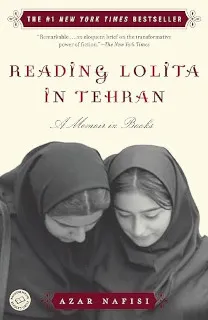
To understand the internal contradictions of Iranian society, he recommends Azar Nafisi’s Reading Lolita in Tehran, a memoir that captures subtle intellectual resistance within the Islamic Republic.
For historical context, he points to Stephen Kinzer’s All the Shah’s Men, which recounts the CIA-backed 1953 coup that reshaped Iran’s political trajectory and continues to shape the fraught relationship between Tehran and Washington.
Raman expands the frame further with Iran’s Grand Strategy, which examines the country’s regional ambitions and evolving relationship with major powers, and Ari Shavit’s My Promised Land, which offers an introspective account of Israel’s formation and internal contradictions.
Taken together, these works provide a grounded starting point for understanding the region’s enduring tensions.
Soundtrack, Lines, and Camera Angles
As Jay Vikram Bakshi observes, sometimes a single scene, score or line of dialogue can capture the emotional landscape of a conflict better than volumes of analysis.
He points to the haunting music of the Israeli television series Fauda, which underscores the deep trauma on all sides of the Israeli-Palestinian conflict.
Bakshi also recalls a memorable line from Leon Uris’s novel Exodus:
"The only kingdom that runs on righteousness is the kingdom of heaven.
The kingdoms of the earth run on oil."
He further draws attention to the opening prologue of Ben Affleck’s film Argo, which succinctly explains the 1953 coup against Iran’s Prime Minister Mohammad Mossadegh—an event that eventually paved the way for the 1979 revolution.
For Bakshi, these cultural moments remind us that centuries of political conflict across the region’s three Abrahamic faiths cannot be understood without a deeper appreciation of history, identity and perspective.
The Roots of Iran’s Modern Upheaval
Aayush Soni directs us to the BBC documentary Iran: The Man Who Changed the World, which examines the rise of Ayatollah Khomeini and the forces that culminated in the 1979 Iranian Revolution.
For a gripping account of a dramatic episode that followed soon after, he recommends Ben Macintyre’s The Siege, which recounts the 1980 Iranian Embassy siege in London—a defining moment in the history of live television news and counter-terrorism.
NS Ramnath adds a philosophical dimension with Ryszard Kapuscinski’s Shah of Shahs. In this remarkable reportage, Kapuscinski pieces together photographs, notes and observations to reveal the inner mechanics of dictatorship—and how revolutions can sometimes replace one form of repression with another.
Cinema as a Window into the Soul
Swarup Gupta recommends three Iranian films that strip away polished storytelling to reveal the deeper psychological and social realities.
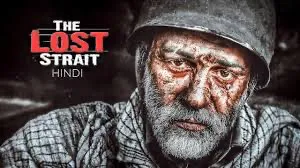
The Lost Strait offers a stark portrayal of the final days of the Iran-Iraq War, highlighting collective sacrifice and the human toll of prolonged conflict.
Under the Shadow (2016) blends psychological horror with political allegory, using the presence of a djinn as a metaphor for life under missile attacks and social repression.
The Circle (2000), directed by Jafar Panahi, presents a powerful critique of systemic oppression faced by women in Iran through an almost documentary-like narrative style.
The Long Arc of Faith and Rivalry
Dinesh Narayanan explores the historical fault lines that continue to shape the region.
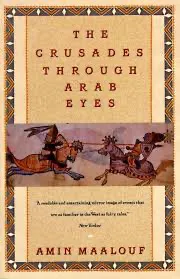
Amin Maalouf’s The Crusades Through Arab Eyes offers a rare retelling of medieval conflicts from the Arab perspective.
Lesley Hazleton’s After the Prophet vividly narrates the origins of the Shia-Sunni divide—one of the defining religious schisms in Islamic history.
Kim Ghattas’s Black Wave traces how the rivalry between Saudi Arabia and Iran since 1979 reshaped politics, religion and ideology across the Middle East.
Culture as a Form of Resistance
Uma Narain reminds us that art often becomes a powerful form of resistance.
She highlights And Here I Am, a play based on the life of Palestinian actor and director Ahmed Tobasi.
[Insert Tobasi photo and caption here]
Narain watched the performance at the Mumbai Lit Fest last November. The play traces Tobasi’s journey from the Jenin refugee camp and an Israeli prison to the theatre stage.
For her, it is a powerful example of how anger and trauma can be transformed through art into a search for freedom.
Taken together, these works offer multiple ways to understand the Middle East—not through headlines, but through the lived experiences, stories and cultural expressions that shape the region.
(Curated by Charles Assisi with inputs from Founding Fuel contributors.)
Enjoyed this? Subscribe to the Founding Fuel Newsletter→
Get our weekend reading recommendations and longform essays delivered to your inbox.
Join the conversation
Founding Fuel aims to create the new playbook of entrepreneurship. Think of us as a hub for entrepreneurs- the go-to place for ideas, insights, practices and wisdom essential to build the enterprise of tomorrow. It is co-founded by veteran journalists Indrajit Gupta and Charles Assisi, along with CS Swaminathan, the former president of Pearson's online learning venture.
Beyond the noise is the signal.
FF Insights: Sharpen your edge, Monday–Friday.
FF Life: Culture, ideas and perspectives you won't find elsewhere — Saturday.

Founding Fuel is sustained by readers who value depth, context, and independent thinking.
If this essay helped you think more clearly, you may choose to support our work.

Founding Fuel is sustained by readers who value depth, context, and independent thinking.
If this essay helped you think more clearly, you may choose to support our work.
Loading comments...



Readers also liked

·Artificial Intelligence
India’s AI Moment
As major powers turn artificial intelligence towards science and national security, India must widen its AI vision beyond inclusion and productivity
PS

Pankaj Saran
Convenor | NatStrat
India’s AI Moment
As major powers turn artificial intelligence towards science and national security, India must widen its AI vision beyond inclusion and productivity
Convenor | NatStrat

·FF Life
France’s Wine Cities: A Feast Beyond the Glass
A journey through Dijon and Lyon reveals France at its finest—sublime food, world-class wines, and centuries of history
AS

Aayush Soni
Independent Journalist
France’s Wine Cities: A Feast Beyond the Glass
A journey through Dijon and Lyon reveals France at its finest—sublime food, world-class wines, and centuries of history
Independent Journalist

·Artificial Intelligence
Beyond AI: A new dawn
Most AI today works within the boundaries set by human designers. New tools like Google's AutoML-Zero challenge that boundary
SW

Sundeep Waslekar
President | Strategic Foresight Group
Beyond AI: A new dawn
Most AI today works within the boundaries set by human designers. New tools like Google's AutoML-Zero challenge that boundary
President | Strategic Foresight Group
Explore more
Dive into other themes from our network.