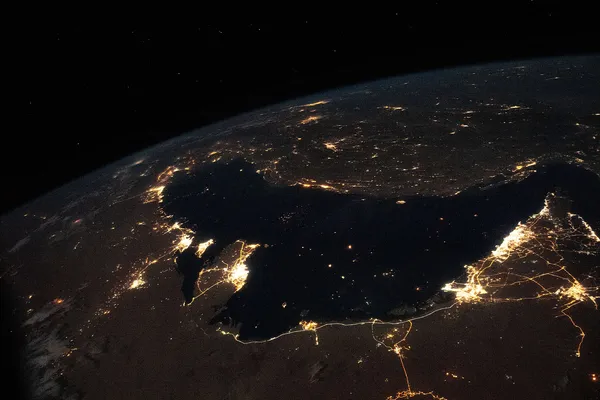
Burgenstock and the New Reality of Power in the Middle East
The US-Iran talks in Switzerland may have reduced the immediate risk of war. But they did little to alter the Middle East's underlying balance of power. Iran remains central to the region's strategic calculations, Israel's concerns remain unresolved, and American leverage appears more limited than many assumed.
24 June 2026· 8 min read
TL;DR
The recent Bürgenstock talks between the US and Iran, while temporarily easing immediate conflict risks, did little to alter the Middle East's fundamental power dynamics. Despite military pressure, Iran has emerged neither weakened nor isolated, solidifying its role as an indispensable regional actor with intact power structures and proxy networks. Conflicting accounts of agreements, notably on nuclear monitoring, highlight that core issues—Iran's nuclear program, the Iran-Israel conflict—remain unresolved. The discussions further exposed the limits of American leverage and military capacity. Iran's enduring centrality, especially its strategic sway over the Strait of Hormuz, underscores its resilience and the profound, unresolved challenges to regional stability that a temporary truce cannot address.
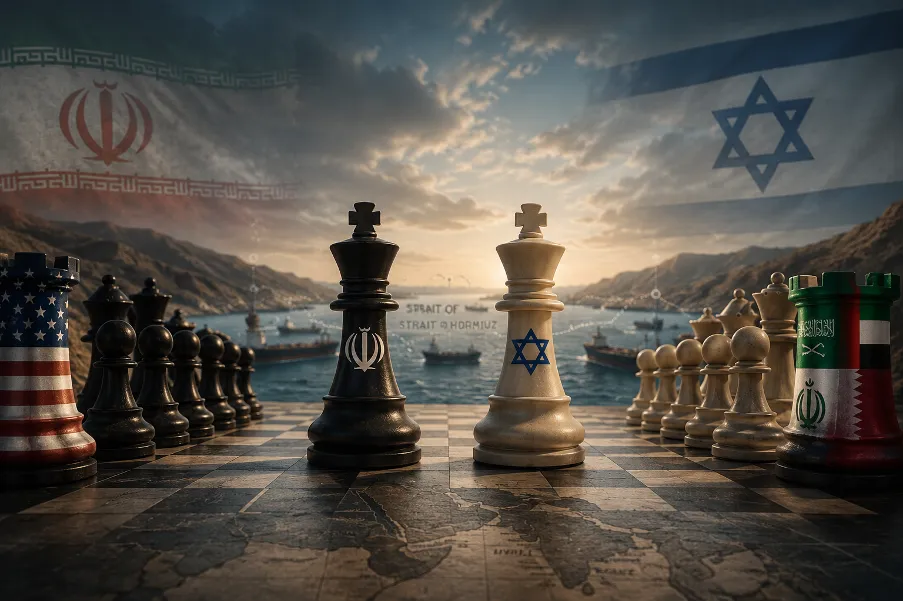
Washington and Tehran emerged from the just concluded talks at Bürgenstock, Switzerland, offering sharply different accounts of what had been agreed. Donald Trump and his deputy, JD Vance, claimed that Iran had agreed to allow international nuclear monitors into the country. Iran’s Parliamentary Speaker Mohammad Bagher Ghalibaf promptly denied that any such agreement had been reached.
The disagreement is revealing. Beyond the headlines and the announcement of a 60-day negotiating process, the fundamental causes that led to the war remain unchanged. The Iranian regime remains intact. So do the Islamic Revolutionary Guard Corps (IRGC), Hezbollah and the wider Axis of Resistance. The future of Iran’s nuclear and missile programmes remains ambiguous. The ideological and existential conflict between Iran and Israel remains unresolved. No durable arrangement has emerged governing the Strait of Hormuz, nor has any broader regional security framework been articulated to manage tensions over the medium-to-long term.
What appears to have been agreed is limited. A 60-day negotiating process has been established. Approximately $12 billion in sanctioned Iranian funds are expected to be released. Iranian oil exports are likely to return to international markets. The immediate risk of disruption to shipping through the Strait of Hormuz appears to have receded. Beyond that, much remains unclear. No formal joint statement has been issued by either Washington or Tehran. Much of what is known about the roadmap has emerged through a Qatari statement.
It is not that Iran emerged from the conflict unscathed. It has been hurt. But four months of military pressure failed to reduce Tehran’s strategic relevance. Iran has emerged neither weakened nor isolated. It’s now an indispensable actor in the region. It remains even more central to the politics of the Strait of Hormuz, the security calculations of the Gulf Cooperation Council (GCC), the future of Lebanon, Syria, Iraq and Yemen, and Israel’s long-term security concerns. The institutions that underpin Iranian power remain intact. So too do the proxy networks through which Tehran projects influence.
The conflict has also exposed the limits of American political leverage. The US campaign highlighted stresses on American munitions inventories, concerns about industrial replenishment capacity identified by the Center for Strategic and International Studies (CSIS), and tensions between commitments in the Middle East and strategic priorities in the Indo-Pacific.
If the Bürgenstock talks reveal anything, it is that US military power has achieved less than many expected. The question now is whether the 60-day pause can produce any meaningful outcomes that four months of war could not.
Iran has emerged neither weakened nor isolated. It is now an indispensable actor in the region.
Hormuz and Beyond
The Strait of Hormuz remains the clearest illustration of Iran’s growing strategic importance. Tehran’s ability to close the waterway is not the only issue. More consequential is its ability to create uncertainty around shipping, insurance, oil flows and liquefied natural gas (LNG) exports, imposing costs on the global economy without necessarily shutting the Strait altogether.
There are indications that Tehran may seek to convert this leverage into something more durable. Iranian officials have floated proposals under which vessels transiting Hormuz after the current 60-day period would require Iranian-backed insurance arrangements or security guarantees. Whether this ultimately becomes policy or remains a negotiating tactic is unclear. The proposal itself suggests that Tehran is thinking beyond military leverage and exploring ways to institutionalise influence over one of the world’s most important maritime corridors.
Yet Hormuz is not solely an Iranian waterway. Oman controls the Musandam Peninsula on the southern side and shares responsibility for one of the world’s most strategically important chokepoints. Any durable arrangement involving the Strait therefore requires Omani cooperation.
It is notable that Iranian officials travelled to Oman immediately after the Bürgenstock discussions concluded. The Swiss talks attracted the headlines. What eventually emerges from Muscat may prove more consequential. Iran and Oman have now agreed that they will establish a joint working group to agree on the future administration of navigation in the Strait of Hormuz, including related services and costs, in accordance with international standards, and will consult the region’s littoral States and other relevant stakeholders. Clearly, Oman has quietly positioned itself as a key actor in shaping any post-60-day outcome.
Qatar is equally important. Doha is both a mediator and an economic actor. It shares the North Field–South Pars reservoir with Iran—the largest known natural gas field in the world and the foundation of Qatar’s economic prosperity. Stability in the Gulf is therefore not merely a diplomatic preference for Doha; it is an economic necessity.
That relationship is more complex than is often acknowledged. Qatar has invested tens of billions of dollars in expanding production from its side of the North Field, working with partners such as TotalEnergies and Eni, while China's Sinopec holds equity stakes in some projects. Iran, constrained by sanctions, underinvestment and technology limitations, has struggled to keep pace. The potential for future disagreements cannot be ruled out. Yet both countries remain tied to the same reservoir and to the broader stability of the Gulf energy system. Gas from the field underpins some of the world's largest long-term LNG contracts, including agreements with China and India extending over multiple decades.
The larger point is that the consequences of confrontation with Iran extend well beyond Iran itself. They touch Gulf monarchies, major energy exporters and some of the world’s largest energy importers. Any future regional arrangement will therefore have to account for Tehran’s interests, whether Washington or its allies like it or not.
Regional Threats
Iran’s centrality is reinforced by the Axis of Resistance—the network of political movements, militias and proxy organisations through which Tehran projects influence across the Middle East. Stretching from Lebanon and Gaza to Iraq, Syria and Yemen, the network provides Iran with a degree of regional reach unmatched by any other state in the region.
More importantly, the network has survived the war. It continues to shape the calculations of every major actor in the Middle East. Israel cannot formulate security policy without considering Hezbollah and Hamas. Iraq cannot stabilise its political order without accounting for the Popular Mobilisation Forces. The Gulf states cannot assess maritime security without considering the Houthis. Syria continues to grapple with Iranian-aligned networks that emerged during its civil war.
Nothing in the Bürgenstock talks suggests that Iran has altered its position towards Israel. The Islamic Republic continues to reject Israel's legitimacy and has built much of its regional strategy around this network of proxies that share that ideology. That ideological conflict remains one of the most significant unresolved issues in the region.
Lebanon illustrates why. Hezbollah is not merely an Iranian proxy. It is also a deeply embedded political actor. The Loyalty to the Resistance Bloc that it controls has representation in Lebanon's Parliament, underscoring how deeply the organisation is woven into the country's political fabric. The Lebanese state lacks the capacity either to dismantle Hezbollah's military infrastructure or to prevent Israeli military operations on its territory.
For more than four decades, the Hezbollah-Israel conflict has repeatedly destabilised the region. That pattern remains unchanged. Hezbollah entered the conflict soon after Hamas launched its October 7 attack and Israel responded in Gaza. A fragile peace broadly held through much of 2025 before collapsing earlier this year, drawing Lebanon back into the confrontation.
Significantly, Hezbollah barely features in the Bürgenstock framework. Israel is not a participant in the negotiations. Yet both Hezbollah and Israel will play a decisive role in determining whether any agreement survives. From Tehran's perspective, Israel's exclusion is hardly accidental. Bringing Israel formally into the process would inevitably shift attention towards Hezbollah, Hamas and the wider Axis of Resistance—the very instruments through which Iran projects influence across the region. It could also create a perception, particularly within Iran and among its regional allies, that Tehran now acknowledges Israel as a legitimate nation-state. For a regime whose ideological identity has long been tied to opposition to Israel, that would carry significant political and symbolic costs.
The conflict may also have strengthened the institutions that matter most inside Iran. While the agreement bears the signatures of civilian leaders, the war appears to have reinforced the position of the Islamic Revolutionary Guard Corps rather than weakened it. The growing prominence of Ahmad Vahidi, one of the most influential figures within Iran's security establishment, is a reminder of where power may now be consolidating. One of the implicit objectives of US and Israeli policy was to diminish the influence of Iran's hard-line security establishment. The evidence so far suggests the opposite may have occurred.
The Israeli Conundrum
The Bürgenstock outcome has virtually no support in Israel. As the country moves towards elections in October, any pause in hostilities is likely to reflect domestic political considerations rather than a belief that the Iranian challenge has diminished.
From an Israeli perspective, the strategic environment looks remarkably similar to the one that existed before the war. Four months of conflict failed to produce the transformation many had hoped for. Iran remains intact. The Axis of Resistance remains operational. Hezbollah remains a threat on Israel’s northern border. The underlying concerns that drove Israeli policy before the conflict remain unresolved.
The disagreements within Israeli politics are largely about leadership and tactics rather than the nature of the challenge itself. Prime Minister Benjamin Netanyahu, opposition leader Yair Lapid and former Prime Minister Naftali Bennett differ sharply on domestic politics and on the conduct of the war. Yet there is little indication that any major political force views Iran, Hezbollah or the wider Axis of Resistance as anything other than Israel's principal long-term security concern. Any or all three could emerge as key figures in post-election coalition negotiations—the likely outcome given Israel's fragmented political system. The debate is therefore less about whether Iran constitutes a threat than about how best to confront it.
That reality matters because Israel is not a participant in the Bürgenstock framework. Yet its actions will play a decisive role in determining whether any pause evolves into something more durable. The talks may have reduced immediate risks. They have not altered Israel’s perception of the threats it faces.
From Israel’s standpoint, that is the central problem. The war may have ended without fundamentally weakening the forces that it was intended to contain.
The Bürgenstock talks exposed not a lack of American military power, but the difficulty of converting that power into durable political outcomes.
American Incoherence
The larger question emerging from Bürgenstock concerns the ability of the Trump administration to translate military power into a coherent political strategy.
The issue is not whether the United States possesses overwhelming military capabilities. It plainly does. The question is whether Washington adequately anticipated the second- and third-order consequences of the conflict: the vulnerability of GCC states to Iranian retaliation, the risks to shipping through the Strait of Hormuz, and the ability of the IRGC to use asymmetric warfare to disrupt energy flows and impose costs on the global economy.
It is not as though these risks were invisible. Iranian officials and Persian-language media had repeatedly signalled the possibility of escalation involving Gulf states and maritime traffic. Yet Trump himself later described attacks on GCC countries as “the biggest surprise” of the conflict, despite reports suggesting that such scenarios had figured in American military assessments.
The tensions between military planning and political messaging became particularly visible on June 22. While JD Vance and his team were engaged in discussions with Iranian negotiators, Trump publicly demanded that Iran restrain its “highly paid PROXIES in Lebanon” and warned of renewed military action. He later threatened severe consequences if Tehran attempted to interfere with shipping through Hormuz.
The remarks reportedly brought the talks close to collapse before diplomatic intervention by Qatar and Pakistan helped keep the process alive. Face-to-face discussions between the American and Iranian delegations subsequently ceased, with negotiations continuing through intermediaries.
The episode illustrates a broader challenge. Military power can be centrally directed. Diplomacy requires message discipline. The two did not always appear aligned during the course of the negotiations.
Domestic political considerations have further narrowed Washington’s room for manoeuvre. Higher gasoline prices carry political risks ahead of Congressional elections in November. At the same time, criticism of the Bürgenstock outcome has come not only from Democratic lawmakers but also from influential Republican voices, reflecting unease across sections of the American political establishment.
Military resources are also a factor. A recent assessment by the Center for Strategic and International Studies (CSIS) warned that the campaign against Iran had significantly depleted key munitions inventories and raised concerns about industrial replenishment capacity. The question is not simply whether the United States can sustain military operations in the Middle East, but whether prolonged commitments there affect readiness in other theatres, particularly the Indo-Pacific.
Taken together, these constraints help explain why Washington ultimately accepted a limited agreement. The Bürgenstock talks exposed not a lack of American military power, but the difficulty of converting that power into durable political outcomes.
A Strategic Pause
The significance of Bürgenstock lies less in what was agreed than in what the talks revealed about the current balance of power in the Middle East.
Four months of war failed to remove Iran from the centre of the region’s strategic calculations. Tehran remains integral to the politics of energy, shipping, regional security and proxy conflict. The institutions that underpin Iranian power, including the IRGC, remain intact. So do the networks through which it projects influence across the Middle East.
The talks may have reduced the immediate risk of escalation. They did not resolve the deeper forces that produced the conflict. The ideological confrontation between Iran and Israel remains unchanged. Hezbollah remains a factor in Lebanon. The future of the Strait of Hormuz remains uncertain. The Gulf states continue to balance security concerns against economic realities.
The outcome also raises broader questions about American power. The United States demonstrated overwhelming military superiority during the conflict. Yet military superiority proved easier to demonstrate than political control. The war did not produce a durable regional settlement, nor did it fundamentally diminish Iran’s strategic relevance.
The talks may have reduced immediate risks without resolving the deeper crises that produced the conflict. Iran remains central to the region's strategic calculations. The United States is left confronting renewed questions about the political effectiveness of its power. Israel's concerns remain.
Bürgenstock is therefore best understood not as a settlement, but as a strategic pause.
The war has stopped. The forces that made it possible have not.
Join the conversation
Vivek Y. Kelkar
Researcher, Analyst & Columnist on Geo-economics, Geopolitics and Sustainability
Vivek Y. Kelkar is a researcher, analyst, and columnist working at the intersection of geo-economics, geopolitics, and sustainability. His work explores global power shifts, strategy, trade transitions, and the geopolitics of climate-related systemic risk—integrating political economy with emerging trends across China, Southeast Asia, and the Middle East. He also writes for Moneycontrol, Modern Diplomat, Asia Times, and The Spectator.
Vivek brings extensive global management experience in M&A, strategy, brand and stakeholder management, and sustainability, alongside deep involvement in media.
He is a Visiting Faculty at IIM-Indore, and has delivered conference papers and participated in expert panels with institutions like the Institute of Chinese Studies, India, besides moderating at online forums.
Vivek holds an MA in International Political Economy from the University of Sheffield and an MBA from Ashridge Business School.
Beyond the noise is the signal.
FF Insights: Sharpen your edge, Monday–Friday.
FF Life: Culture, ideas and perspectives you won't find elsewhere — Saturday.

Founding Fuel is sustained by readers who value depth, context, and independent thinking.
If this essay helped you think more clearly, you may choose to support our work.

Founding Fuel is sustained by readers who value depth, context, and independent thinking.
If this essay helped you think more clearly, you may choose to support our work.
Loading comments...



Readers also liked

·Leadership & Organisation
Who Owns the Fire?
A leader can light the spark. The harder question is what happens to the fire afterwards?
SP

Satish Pradhan
Independent Consultant
Who Owns the Fire?
A leader can light the spark. The harder question is what happens to the fire afterwards?
Independent Consultant
·Entrepreneurship, Startups & Innovation
The Water Opportunity Is Real. Building a Good Business Is Harder
Eight listed Indian companies show why a growing market doesn't guarantee durable value—and how some are finding ways around the difficult economics of water infrastructure.
BK

Bharti Krishnan
Founder | Finetrain
The Water Opportunity Is Real. Building a Good Business Is Harder
Eight listed Indian companies show why a growing market doesn't guarantee durable value—and how some are finding ways around the difficult economics of water infrastructure.
Founder | Finetrain
·Business & Strategy
The Battle for the Tata Inheritance
The struggle inside Tata Trusts is exposing a question that goes far beyond personalities: can an unusual compact between philanthropy, ownership and corporate power survive the loss of the steward who held it together?
IG

Indrajit Gupta
Co-founder and Director | Founding Fuel
The Battle for the Tata Inheritance
The struggle inside Tata Trusts is exposing a question that goes far beyond personalities: can an unusual compact between philanthropy, ownership and corporate power survive the loss of the steward who held it together?
Co-founder and Director | Founding Fuel
Explore more
Dive into other themes from our network.