
How the Iran War Is Reshaping the Global Economy
The conflict is no longer just a military confrontation. It is rapidly becoming a struggle over the global energy system, maritime trade and geoeconomic power—with the Gulf caught in the middle
17 July 2026· 9 min read
TL;DR
The conflict involving Iran has fundamentally shifted, transcending military confrontation to become a critical struggle for global energy systems, maritime trade, and geoeconomic power. US objectives now focus on dismantling Iran's capacity to threaten the vital Strait of Hormuz and intensifying economic pressure. Crucially, Iran strategically leverages asymmetric warfare, making global economic disruption a deliberate aim by exploiting dependence on Gulf energy flows. Both nations are ensnared in an 'escalation trap,' where escalating actions continuously heighten political and economic costs. This dynamic strains Gulf economies, exposing Washington's apparent underestimation of Iran's geoeconomic leverage and its lack of a clear endgame.
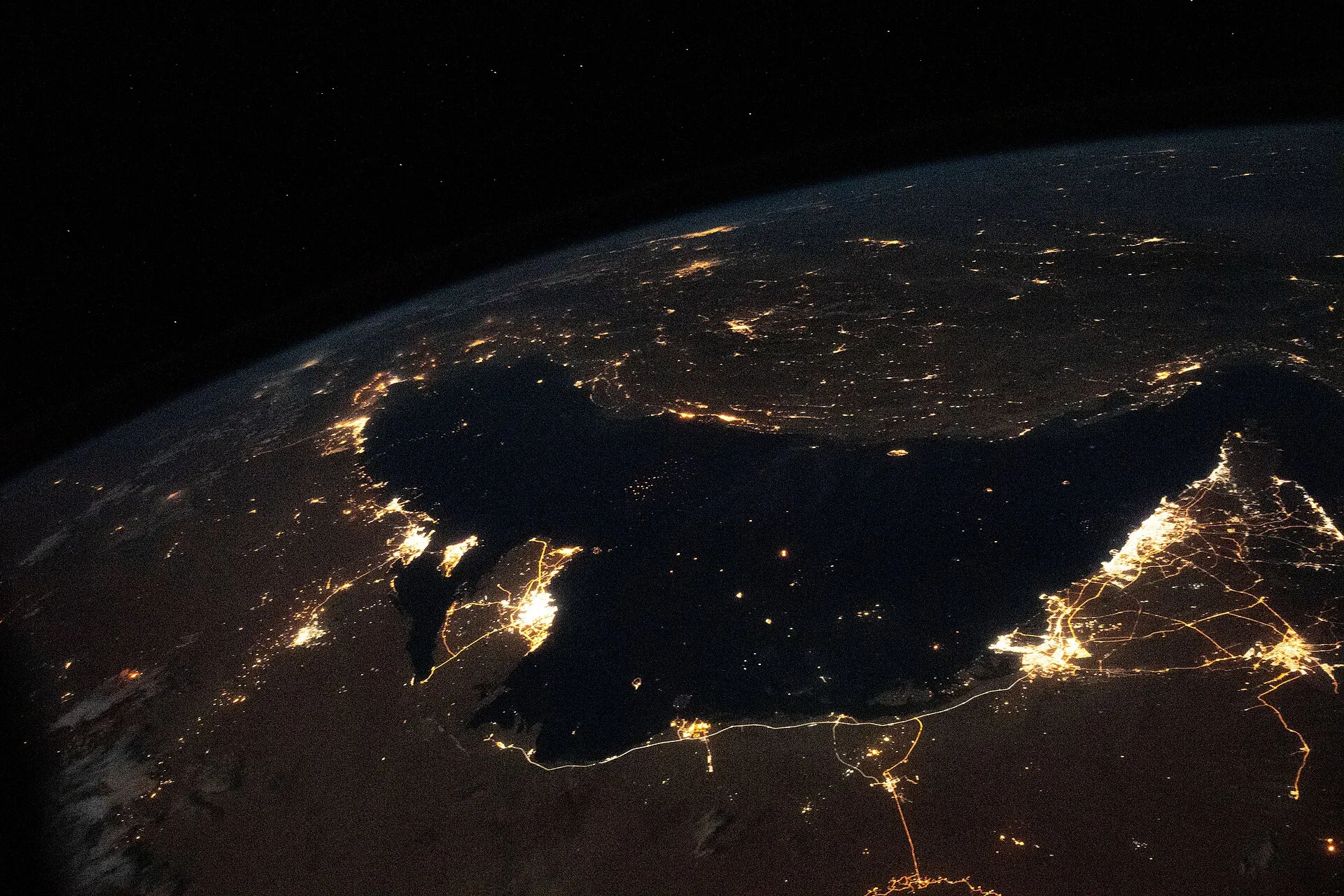
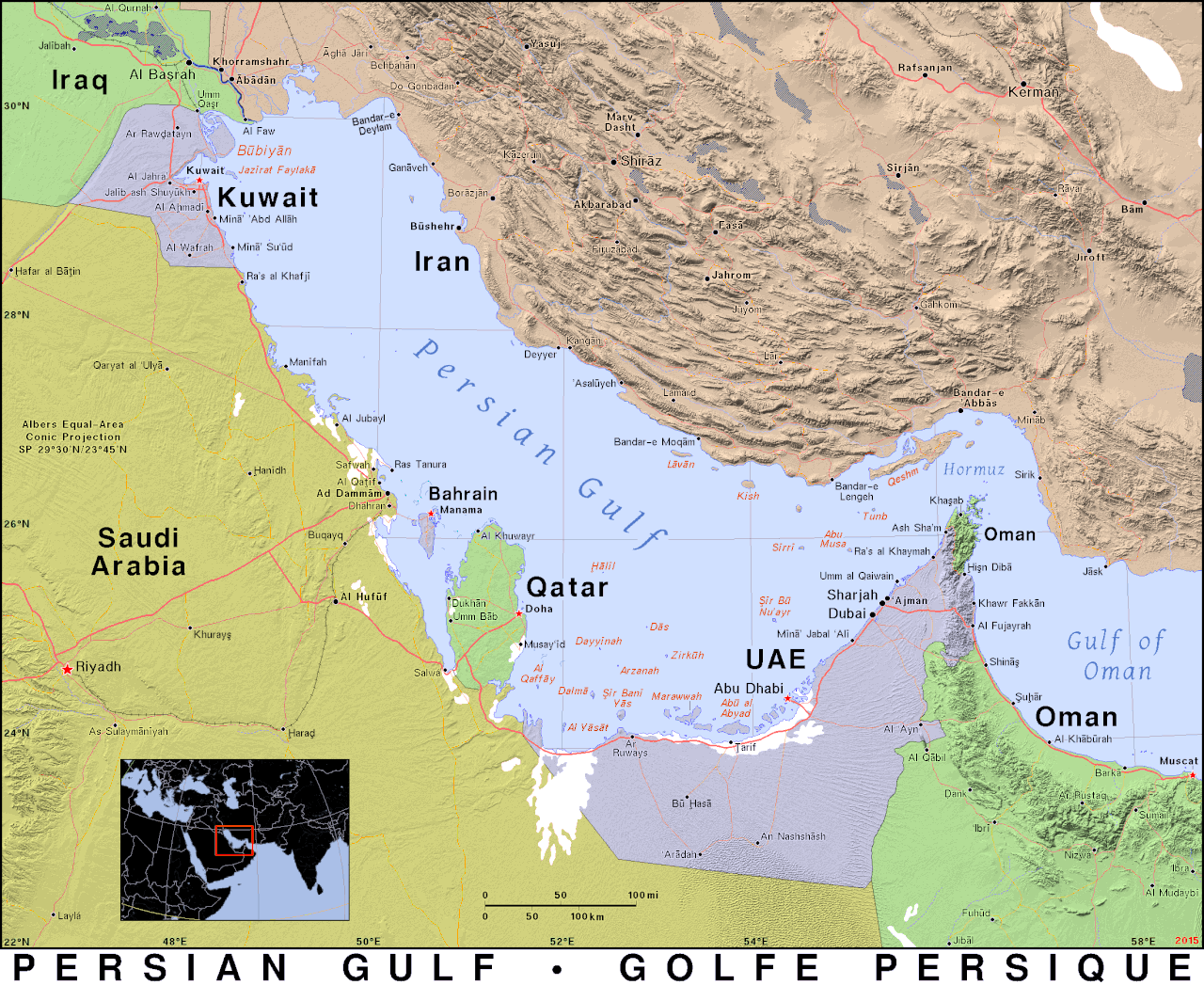
Iran’s Hormozgan province, overlooking the Strait of Hormuz, is under attack at the time of writing. It houses vital missile and drone facilities. Qeshm, Greater Tunb and some smaller islands in the Persian Gulf were bombed this past week. The bombing is gradually expanding deeper into the Iranian mainland. US Central Command is systematically targeting coastal missile batteries, radar installations, drone facilities, naval assets and command nodes along Iran’s southern coastline, including positions overlooking the Strait of Hormuz. The choice of targets is revealing.
Earlier operations sought to degrade Iran's nuclear infrastructure and conventional military capability. The latest US campaign is directed at dismantling the military architecture—coastal missile batteries, surveillance radars, drone launch sites, naval facilities and command networks—that enables Tehran to threaten maritime trade and Gulf energy systems. Washington's objective has shifted beyond degrading Iranian military capability to securing the strategic geography of the Strait of Hormuz while simultaneously increasing economic pressure on Tehran.
Yet this shift does not resolve the central uncertainty surrounding the war. Iran's principal threat does not arise from geography alone, but from the combination of its conventional capabilities, its network of proxies and the risks they collectively pose to Israel, Lebanon, Saudi Arabia and the wider region.
Every military action, whether by Washington or Tehran, creates fresh incentives for retaliation. Every horizontal or vertical escalation increases the political, economic and military costs already incurred, making disengagement progressively harder. The conflict has become an escalation trap. The war is now shaped by the interaction between military operations and the quest for economic leverage. Its principal collateral victims are the Gulf Cooperation Council (GCC) economies, which now face increasingly complex questions of security, alliances and economic resilience.
The United States has yet to articulate—or demonstrate—a credible endgame. Nothing so far suggests that the Trump administration has one. Its objectives have shifted repeatedly. Iran, too, is caught in the escalation trap. But unlike Washington, Tehran has at least articulated a strategic objective: preserving its freedom of action and regional influence.
Economic disruption has never been an unintended consequence of this conflict. It has been one of Iran's principal strategic objectives. Since March 1, when Iran responded with massive attacks on the GCC, Tehran has sought to transform a conventional military confrontation into one centred on geographic leverage. Its strategy of asymmetric warfare is designed to raise the global economic and political costs of the conflict by exploiting the world's dependence on uninterrupted Gulf energy flows and maritime trade.
Washington appears to have underestimated that leverage. The greater the uncertainty surrounding Gulf energy flows, the greater the pressure on energy-importing economies, financial markets and regional states—all of which have little influence over the course of the conflict.
Washington's Trap
The challenges confronting Washington are manifold. The United States must consider not only the impact of the conflict on global energy markets but also its collateral consequences for the Gulf economies. It is far from clear that the Trump administration is fully factoring these into its calculations. Suppressing Iran's ability to threaten the Strait of Hormuz does not eliminate either the immediate or the longer-term risks.
The strikes have degraded Iran's military architecture but have not destroyed its capacity to reconstitute itself asymmetrically.
Iran's military infrastructure has undoubtedly been damaged by US strikes. Yet its ability to respond asymmetrically—and impose costs on Gulf economies—remains intact. Its missile systems, mobile launchers, drones and command facilities are dispersed and concealed along the coast and deep inland. The strikes have degraded Iran's military architecture but have not destroyed its capacity to reconstitute itself asymmetrically, even if without matching American firepower.
News reports suggest that Trump is considering expanding military operations further. Each new phase will generate its own momentum, with both intended and unintended consequences. If Washington's objective is to guarantee freedom of navigation through the Persian Gulf and the Strait of Hormuz, it will require not simply continuous surveillance and repeated strikes, but the sustained ability to identify and neutralise Iranian positions along the coast and farther inland.
That task becomes progressively harder as the conflict escalates. Reports now suggest the administration is considering ground operations. Yet each of the islands that could become military objectives—including Qeshm, Larak and Kharg—presents a distinct strategic dilemma.
The first question is what capturing these islands would actually achieve.
Qeshm offers the greatest operational advantage over the Strait of Hormuz. Dominating its northern approaches, it would significantly improve surveillance and maritime control while denying Iran an important observation point. But its proximity to the Iranian mainland would expose any occupying force to sustained missile attacks, drone strikes, artillery fire and maritime harassment, requiring continuous reinforcement and logistical support. The principal challenge would quickly shift from capturing the island to holding it. Even then, missile and drone systems deeper inland would continue to threaten shipping.
Larak presents similar advantages—and even greater disadvantages. Located alongside the deep-water shipping channel used by very large crude carriers, it could strengthen oversight of maritime traffic. But without control of Qeshm and adjacent sections of the Iranian mainland, sustaining operations there would remain extremely difficult.
Kharg poses a different dilemma. Closer to Kuwait and Iraq, any assault would require operations launched and supported from those countries. Penetrating deep into the Gulf without first securing the approaches through Qeshm and Larak would carry considerable military risk. Kharg is Iran's principal crude export terminal, and sustained interdiction would sharply reduce Tehran's oil revenues. But it would do little to secure freedom of navigation through Hormuz.
None of these options offers a decisive military or economic solution. Each resolves one operational problem only by creating a larger and more enduring military obligation for Washington. Nor would they achieve regime change, dismantle Iran's proxy network or weaken the control exercised by the Islamic Revolutionary Guard Corps over the Iranian state.
Military operations and geoeconomic leverage are becoming increasingly self-reinforcing. Every effort to reduce Iran's coercive capacity demands a deeper military commitment. Every escalation, in turn, increases the strategic value of the economic disruption Tehran seeks to create.
The conflict's decisive battlefield is therefore no longer defined solely by missiles, aircraft or naval deployments. It now encompasses the economic architecture on which Gulf prosperity—and global energy markets—depend. That reality will shape not only military and diplomatic decisions, but also the behaviour of commodity markets, shipping companies, insurers, energy producers and governments far beyond the region.
The Economic Architecture
The Strait of Hormuz lies at the centre of this strategic equation. Roughly one-fifth of globally traded crude oil and about one-fifth of global LNG pass through it. Around 90% of those LNG cargoes are destined for Asia, while Europe continues to depend heavily on LNG imports to replace Russian pipeline gas lost after the invasion of Ukraine.
Qatar, the world's largest LNG exporter, depends entirely on uninterrupted passage through Hormuz. It also shares the world's largest natural gas field with Iran, albeit without a formal agreement. The Strait's significance lies not simply in the volume of hydrocarbons that transit it, but in the concentration of systemic risk it represents.
Iranian missiles and drones have struck oil production facilities across the Gulf. Yet oil may not pose the greatest immediate risk to the global economy. While crude remains the most visible barometer of geopolitical stress, the more significant structural vulnerabilities now lie in liquefied natural gas, commercial shipping and maritime logistics.
Unlike crude oil, LNG markets offer very little flexibility. Liquefaction capacity cannot be expanded quickly. Specialised LNG carriers remain in limited supply. Destination-specific regasification terminals restrict cargo diversion, while long-term contracts reduce opportunities for substitution. As a result, threats to Gulf gas infrastructure have a disproportionately larger impact on LNG markets than comparable disruptions to crude oil. The escalation spiral is therefore creating greater leverage through gas markets than through oil alone.
Global LNG production was expected to expand by around seven per cent in 2026 as new capacity came on stream in North America and elsewhere. Those forecasts assumed relatively stable Gulf exports and secure maritime routes. Those assumptions no longer hold. Asian spot LNG benchmarks have become increasingly sensitive to developments in the Gulf, while European utilities continue competing aggressively for flexible cargoes ahead of winter. Unlike oil, LNG markets cannot easily rely on strategic reserves or significant spare production capacity.
Global Interconnections
The damage inflicted on Russian energy infrastructure during the Russia–Ukraine war further magnifies these pressures. Global energy markets are deeply interconnected. Disruptions in one region rapidly affect prices and availability elsewhere. The Gulf conflict and the Russia–Ukraine war can no longer be analysed in isolation. They now interact through the same oil and LNG markets.
The Gulf conflict and the Russia–Ukraine war can no longer be analysed in isolation. They now interact through the same oil and LNG markets.
Shipping is another critical transmission mechanism. The Gulf's maritime network was designed for efficiency—concentrated infrastructure, predictable schedules and tightly integrated logistics. These strengths have become strategic vulnerabilities. The longer vessels remain trapped in the Gulf, the greater the shortage of shipping capacity worldwide. Higher insurance premiums, longer voyage times, vessel rerouting and reduced tanker availability all increase the delivered cost of energy. The weaponisation of Hormuz magnifies each of these effects.
Saudi Arabia's recent export strategy illustrates both the resilience and the limits of regional adaptation. Greater use of the East-West Pipeline connecting the Kingdom's Eastern Province with Yanbu on the Red Sea has reduced dependence on Hormuz. Yet strategic redundancy is not the same as strategic security.
The Houthis in Yemen have renewed threats to disrupt shipping through Bab el-Mandeb and the Red Sea. If that pressure point becomes active, Yanbu ceases to provide an effective hedge against disruption in Hormuz.
Renewed tensions between Saudi Arabia and the Houthis have reopened the possibility of sustained insecurity in the Red Sea. Bab el-Mandeb has emerged as a second maritime chokepoint capable of dramatically amplifying the risks originating in Hormuz.
The China Factor
China's potential role in ending this conflict is no longer defined by diplomacy alone. It is increasingly shaped by economics.
Beijing has quietly acquired a more influential position in global energy markets by shaping the demand side of the equation. Chinese refiners have reduced imports, while the country's large strategic inventories have given Beijing considerable flexibility over the timing of its oil and gas purchases. Saudi Arabia and other producers continue to influence prices through supply. China is increasingly able to influence them through demand. Its inventories have become an instrument of strategic market power.
This carries important geopolitical consequences. Gulf producers now operate in a market shaped simultaneously by military risk and by the purchasing behaviour of a single dominant consumer. Beijing has remained politically cautious throughout the conflict, but its commercial decisions are increasingly influencing the resilience of global energy markets.
By managing demand, China can moderate price spikes, delay supply shortages and alter the commercial consequences of military escalation—without direct diplomatic intervention. In effect, Beijing has acquired an indirect but significant role in determining how successfully geoeconomic leverage translates into sustained market pressure.
Together, these developments are reshaping the strategic landscape. The war is evolving into a contest over the global energy system—and, by extension, global economic growth. This introduces a new dimension to the conflict, particularly as Washington has little influence over China's economic decisions or diplomatic calculations. China is unwilling to step in diplomatically. It's calculating how the conflict's eventual outcome might alter the geopolitical balance in its favour.
A Reshaped Strategic Landscape
The GCC countries now occupy the most strategically exposed position in the conflict. They have become the principal transmission mechanism through which military escalation is converted into geoeconomic pressure.
The paradox is striking. Although the GCC states exercise relatively little influence over the course of the war, they are likely to bear many of its most significant long-term economic and political consequences.
Saudi Arabia's challenge is no longer confined to protecting oil production. Riyadh has invested heavily in strategic redundancy through the East-West Pipeline and expanded export capacity at Yanbu, reducing its dependence on Hormuz. Those investments have proved prescient, but they cannot eliminate vulnerability. The longer the conflict continues, the more difficult Saudi Arabia's strategic choices become. Unless the United States can establish overwhelming military superiority over Iran and its proxies—an increasingly unlikely prospect—Riyadh will face growing questions about deterrence, defence and regional alignment.
The United Arab Emirates confronts a different dilemma. Abu Dhabi has spent decades positioning itself as the Gulf's principal commercial, logistics and financial hub. Fujairah, located outside the Strait of Hormuz, was developed precisely to reduce exposure to disruption in the Gulf. Yet resilience ultimately depends on the duration and intensity of the conflict. The UAE's challenge is not merely to protect infrastructure but to preserve the economic model on which its prosperity rests.
Qatar's vulnerability stems from liquefied natural gas. Its economic strength depends overwhelmingly on LNG exports and the giant offshore gas field it shares with Iran. The presence of major US military facilities has also made Qatar a potential Iranian target. Yet the shared gas field gives Doha a unique diplomatic channel with Tehran, one it exercised during negotiations leading to last month's Memorandum of Understanding in Switzerland. Even so, Qatar has little influence over American, Iranian or Israeli strategic decisions. It can offer economic incentives, but the broader political calculus lies elsewhere.
Oman’s primary importance in the context of the war arises from its geography. Overlooking the southern approaches to Hormuz and maintaining long-standing relationships with Iran, the Gulf monarchies and Western governments, Muscat remains an indispensable intermediary during periods of crisis. Yet diplomacy becomes progressively harder as conflicts evolve into self-reinforcing strategic systems. Oman can facilitate dialogue, but it cannot reverse the structural dynamics driving the conflict.
Bahrain and Kuwait face equally difficult choices. Bahrain hosts the US Fifth Fleet, making it central to American military operations while simultaneously increasing its exposure to Iranian retaliation. Kuwait plays a similarly important logistical role. Neither country has meaningful influence over the trajectory of the war. Yet both become more strategically important—and more vulnerable—as the conflict deepens.
Deepening Escalation
Iran, meanwhile, has little incentive to abandon a strategy that continues to impose disproportionate costs despite mounting military losses. Its conventional capabilities have undoubtedly been degraded, but the strategic logic underpinning its approach remains intact. Regime survival and the preservation of its hardline ideology remain Tehran's overriding objectives. That helps explain why military setbacks have not translated into strategic acquiescence.
The balance of evidence points towards a prolonged period of deepening escalation rather than rapid de-escalation. None of the principal actors appears to seek a wider conflict, yet none can readily abandon the strategic calculations that led to war.
Israel cannot accept the reconstitution of Iranian military capabilities or the continued expansion of Tehran's proxy network. Iran cannot relinquish the geoeconomic leverage it derives from the vulnerability of Gulf energy systems. The United States cannot easily withdraw without accepting a significant strategic and political setback. The GCC states remain caught between these competing imperatives, increasingly forced to reconsider how closely they should align with Washington while remaining acutely conscious of the political sensitivities surrounding any overt alignment with Israel, particularly in Saudi Arabia and Qatar. A relationship with Iran is ruled out at the moment, unless it involves a firm, long-term peace, and the opportunity for economic investments.
The principal risks over the coming months lie less in dramatic military breakthroughs than in the cumulative interaction of strategic decisions.
Four developments warrant particularly close attention.
First, any sustained American shift from suppressing Iran's coastal capabilities to establishing some form of persistent territorial control around key islands or maritime approaches.
Second, renewed Houthi operations that transform Bab el-Mandeb from a latent contingency into an active theatre of conflict, effectively linking the Gulf's two principal maritime chokepoints.
Third, deliberate attacks on major Gulf LNG facilities or desalination infrastructure, signalling a broader Iranian effort to increase the economic costs of the conflict.
Fourth, sustained disruption to commercial shipping that begins to reshape long-term oil, LNG and petrochemical trading patterns rather than merely generating temporary market volatility.
The conflict is unlikely to be decided by a decisive battlefield victory. It is evolving into a prolonged contest over the geography, politics and economics of the Middle East—and over the resilience of the global economic system that depends upon it.
Dig Deeper
- What the US-Iran deal means for the rest of the Middle East (and beyond) | Atlantic Council
- The Red Sea is Exposed | The Ideology Machine
- Who is calling the shots in Iran amid the deadly war with the US? | Al Jazeera
Join the conversation
Vivek Y. Kelkar
Researcher, Analyst & Columnist on Geo-economics, Geopolitics and Sustainability
Vivek Y. Kelkar is a researcher, analyst, and columnist working at the intersection of geo-economics, geopolitics, and sustainability. His work explores global power shifts, strategy, trade transitions, and the geopolitics of climate-related systemic risk—integrating political economy with emerging trends across China, Southeast Asia, and the Middle East. He also writes for Moneycontrol, Modern Diplomat, Asia Times, and The Spectator.
Vivek brings extensive global management experience in M&A, strategy, brand and stakeholder management, and sustainability, alongside deep involvement in media.
He is a Visiting Faculty at IIM-Indore, and has delivered conference papers and participated in expert panels with institutions like the Institute of Chinese Studies, India, besides moderating at online forums.
Vivek holds an MA in International Political Economy from the University of Sheffield and an MBA from Ashridge Business School.
Beyond the noise is the signal.
FF Insights: Sharpen your edge, Monday–Friday.
FF Life: Culture, ideas and perspectives you won't find elsewhere — Saturday.

Founding Fuel is sustained by readers who value depth, context, and independent thinking.
If this essay helped you think more clearly, you may choose to support our work.

Founding Fuel is sustained by readers who value depth, context, and independent thinking.
If this essay helped you think more clearly, you may choose to support our work.
Loading comments...


Readers also liked

·Economy, Policy & Society
How Iran Is Turning the Global Economy Into a Battlefield
As the conflict with the United States and Israel intensifies, Iran’s new leadership is signalling a prolonged confrontation—one that combines conventional warfare with pressure on global energy flows and supply chains.
VK

Vivek Y. Kelkar
Researcher, Analyst & Columnist on Geo-economics, Geopolitics and Sustainability
How Iran Is Turning the Global Economy Into a Battlefield
As the conflict with the United States and Israel intensifies, Iran’s new leadership is signalling a prolonged confrontation—one that combines conventional warfare with pressure on global energy flows and supply chains.
Researcher, Analyst & Columnist on Geo-economics, Geopolitics and Sustainability

·Economy, Policy & Society
The US–Israel War on Iran: The Risks to India’s Strategic Hedging
Energy dependence, remittance flows and trade corridors reveal how deeply India’s economy is tied to stability in West Asia. Part II of a two-part series.
VK
Vivek Y. Kelkar
Researcher, Analyst & Columnist on Geo-economics, Geopolitics and Sustainability
The US–Israel War on Iran: The Risks to India’s Strategic Hedging
Energy dependence, remittance flows and trade corridors reveal how deeply India’s economy is tied to stability in West Asia. Part II of a two-part series.
Researcher, Analyst & Columnist on Geo-economics, Geopolitics and Sustainability

·FF Life
Who Gets to Decide What Happens at the End of Your Life?
Living wills remain on the fringes, but they are forcing India to confront family power, cultural taboo, and the realities of end-of-life care—signalling a profound shift in how the country thinks about dignity and medical decision-making
SB

Sveta Basraon
Editor and Head of Operations | Founding Fuel
Who Gets to Decide What Happens at the End of Your Life?
Living wills remain on the fringes, but they are forcing India to confront family power, cultural taboo, and the realities of end-of-life care—signalling a profound shift in how the country thinks about dignity and medical decision-making
Editor and Head of Operations | Founding Fuel
Explore more
Dive into other themes from our network.