
How to battle a demand slowdown
In a slowdown, consumers become more choosy. Are auto majors doing enough to develop and launch next generation cars that today’s consumers find desirable?
18 August 2019· 3 min read· 1 comments
TL;DR
This article offers a compelling counter-narrative for navigating economic slowdowns, challenging the efficacy of traditional responses. It highlights how new auto entrants like MG Hector and Kia Seltos achieved remarkable market success despite industry struggles. Their strategy: launching genuinely 'desirable' next-generation vehicles packed with modern tech and compelling design at attractive prices.
This success underscores that during downturns, consumers become highly selective, prioritizing true 'drool value' over superficial fixes or discounts. For business leaders, the critical takeaway is to abandon outdated 'lazy practices' like stock dumping. Instead, a relentless focus on product innovation, creating offerings that genuinely resonate with evolving consumer desires, is paramount. This strategic imperative is key to not just surviving, but thriving and capturing significant market share in challenging economic climates.

Dear Friend,
The slowdown in the auto sector has everyone worried, including the Prime Minister. There’s been a demand from the industry to rationalise taxes. It is anybody’s guess how a few percentage point reduction in GST could help spur demand.
Auto majors aren’t the only ones clutching at straws though. Most consumer companies and retailers are now bracing for tough times. There’s talk of lay-offs in the air. Vendor payments are already stretched. And if the next two quarters turn out to be just as bad, nobody is ruling out deeper cuts in both production and people.
There are two current events though that merit reflection. There’s been considerable chatter about the seemingly successful launch of MG Motor’s Hector, the compact SUV, on June 27. Here was a brand whose antecedents no one had heard about. MG Hector claimed to have notched up 28,000 bookings in a space of 22 days that would account for a whole year’s production—and decided to close the bookings, citing production constraints. At a time, when the entire auto sector is reeling from a severe slowdown, how did an unknown Chinese maker like the Shanghai Automotive Industry Corporation (SAIC), which owns MG Motors, make a dent? Although deliveries have begun, the waiting period in many cases reportedly stretches to nearly seven months.
Yet another SUV launch is round the corner, on August 22, with the Kia Seltos. This will be the real deal. The response to the Kia Seltos, say experts, will signal whether there is still real consumer appetite for new cars. Much like the MG Hector, the sleekly designed Kia Seltos comes loaded with a bunch of modern-day tech-led features. And an attractive price tag. So much so that more than 23,000 cars have already been booked, well before the launch date.
That brings us to the question that auto majors need to ask themselves: are they doing enough to develop and launch next generation cars that today’s consumers find desirable? The operative word is desire, or drool value. Nowadays, most new cars take about two years to go from concept to production ready. Combining the engineering prowess and design finesse and styling is as much about art as it is about science.
In a slowdown, consumers suddenly become more choosy about what they put their money on. That’s why Professor Rishikesha Krishnan’s magnum opus on innovation is a must-read.
For the longest time, most auto majors, with the exception of Maruti and perhaps Toyota, repeatedly dumped stock far more than what their dealers could possibly sell.
Since the industry measured itself on primary sales, it created an illusion of runaway growth. And then the pile-up became too big to hide. Weighed down by inventory and high finance costs, many dealerships began to fold up. Or relied on unsustainable discounts to drive short-term sales.
In good times, manufacturers often pick up bad habits. Dumping stock on dealers was one such lazy practice. It needs to be immediately jettisoned. And auto makers need to go back to developing desirable cars that people want to buy.
Best,
Indrajit Gupta
Featured Story
What leaders need to do to capture value from innovation in the digital era

Innovation is easier in the digital era. Yet, capturing value from innovation is becoming more challenging. This calls for the leader’s role to change to that of chief experimenter. (By Rishikesha T Krishnan. Read Time: 9 mins)
What We Are Reading and Listening
Companies Need to Prepare for the Next Economic Downturn
Business leaders need to consider how to best position themselves for harsher macroeconomic conditions. If history is any guide, many companies will prepare too little, too late, and too defensively. By Martin Reeves, Kevin Whitaker and Christian Ketels in the Harvard Business Review. (Read time: 5 mins)
How Organisational Culture Shapes Digital Transformation
In this Knowledge@Wharton podcast, FedEx’s Nik Puri and Wharton’s Dan Alig discuss the challenges and rewards of balancing culture and technology in digital transformation (Listen time: 30:31 mins)
From Our Archives
It’s time to destroy your business
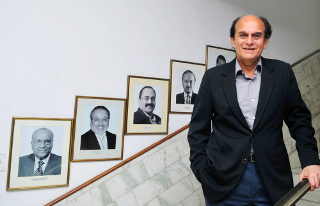
[Harsh Mariwala, chairman, Marico. Photograph by Ramesh Pathania/Mint]
Question and overthrow fondly held assumptions if you are to build an enterprise for the future, writes Harsh Mariwala (Read time: 6 mins)
Why digital transformation is so difficult to achieve

The challenges aren't as much about innovation or technology, but unlearning and learning afresh, writes Nitin Srivastava (Read time: 3 mins)
Work smart. Not hard

[Photograph © Shi Deru (a.k.a. Shawn Xiangyang Liu) under Creative Commons]
Hard work is the base, but doing the same thing many times over will not help you solve a problem or master a new skill, says Kavi Arasu (Read time: 4 mins)

Join the conversation
Founding Fuel aims to create the new playbook of entrepreneurship. Think of us as a hub for entrepreneurs- the go-to place for ideas, insights, practices and wisdom essential to build the enterprise of tomorrow. It is co-founded by veteran journalists Indrajit Gupta and Charles Assisi, along with CS Swaminathan, the former president of Pearson's online learning venture.
Beyond the noise is the signal.
FF Insights: Sharpen your edge, Monday–Friday.
FF Life: Culture, ideas and perspectives you won't find elsewhere — Saturday.

Founding Fuel is sustained by readers who value depth, context, and independent thinking.
If this essay helped you think more clearly, you may choose to support our work.

Founding Fuel is sustained by readers who value depth, context, and independent thinking.
If this essay helped you think more clearly, you may choose to support our work.
Loading comments...




Readers also liked

·Business & Strategy
Battles in The Age of Engagement
The tech giants are rewriting the rules of how business empires are built. How deeply they can engage the millions on their network is the key to the kingdom. No business, including their own, is invulnerable. The concluding part in a two-part series
HC

Haresh Chawla
Investor | Entrepreneur
Battles in The Age of Engagement
The tech giants are rewriting the rules of how business empires are built. How deeply they can engage the millions on their network is the key to the kingdom. No business, including their own, is invulnerable. The concluding part in a two-part series
Investor | Entrepreneur

·Business & Strategy
How to Build Your Business 2.0
The seven lessons I learnt on how to foster a culture of innovation and build breakthrough teams
HC
Haresh Chawla
Investor | Entrepreneur
How to Build Your Business 2.0
The seven lessons I learnt on how to foster a culture of innovation and build breakthrough teams
Investor | Entrepreneur

·Business & Strategy
How to create your product differentiation strategy
How today’s companies can stand out in a competitive marketplace, differentiate their products and build a high-value company. The second article in a five-part series
CK

CKGSB Knowledge
Knowledge Partner
How to create your product differentiation strategy
How today’s companies can stand out in a competitive marketplace, differentiate their products and build a high-value company. The second article in a five-part series
Knowledge Partner
Explore more
Dive into other themes from our network.