FF Daily #297: Why mistakes matter
February 12, 2021: An exercise to get the most out of your time; The law is an ass; If the Titanic were to sink today
12 February 2021· 5 min read
TL;DR
This article challenges conventional wisdom, asserting that embracing mistakes is not merely an option but the only path to genuine progress and innovation. Drawing insights from philosophy, it emphasizes learning from past "tempting mistakes" to avoid repeating them. Crucially, business leaders are urged to actively cultivate environments where experimentation and even "making mistakes" are encouraged—seeing errors as vital opportunities for learning and breakthroughs, akin to evolutionary trial-and-error. Complementing this, the piece provides an actionable framework for strategic time management: identifying high-value activities, curbing distractions, and restricting unproductive habits. This dual emphasis on intelligent risk-taking and disciplined focus offers a compelling strategy for fostering innovation and optimizing leadership effectiveness.

Good morning
What do philosophers do? Should we seek out mistakes deliberately? How do we frame a question right and why is it important? These are themes Daniel Dennett answers in the tour de force that is Intuition Pumps and Other Tools for Thinking.
“Scientists often ask me why philosophers devote so much of their effort to teaching and learning the history of their field. Chemists typically get by with only a rudimentary knowledge of the history of chemistry, picked up along the way, and many molecular biologists, it seems, are not even curious about what happened in biology before about 1950. My answer is that the history of philosophy is in large measure the history of very smart people making very tempting mistakes, and if you don’t know the history, you are doomed to making the same darn mistakes all over again. That’s why we teach the history of the field to our students, and scientists who blithely ignore philosophy do so at their own risk…
“Sometimes you don’t just want to risk making mistakes; you actually want to make them—if only to give you something clear and detailed to fix. Making mistakes is the key to making progress. Of course there are times when it is really important not to make any mistakes—ask any surgeon or airline pilot. But it is less widely appreciated that there are also times when making mistakes is the only way to go. Many of the students who arrive at very competitive universities pride themselves in not making mistakes—after all, that’s how they’ve come so much farther than their classmates, or so they have been led to believe. I often find that I have to encourage them to cultivate the habit of making mistakes, the best learning opportunities of all. They get ‘writer’s block’ and waste hours forlornly wandering back and forth on the starting line. ‘Blurt it out!’ I urge them. Then they have something on the page to work with…
“Mistakes are not just opportunities for learning; they are, in an important sense, the only opportunity for learning or making something truly new. Before there can be learning, there must be learners. There are only two non-miraculous ways for learners to come into existence: they must either evolve or be designed and built by learners that evolved. Biological evolution proceeds by a grand, inexorable process of trial and error—and without the errors the trials wouldn’t accomplish anything.”
Have a good day.
In this issue.
- An exercise to get the most out of your free time
- The law is an ass
- If the Titanic was sinking today
An exercise to get the most from your free time
The goal of the focused life at home, writes Scott H Young, “isn’t to be perfectly productive, wringing optimization out of every second of the day. Such would be the life for a machine, not a human being. A life of focus simply means choosing where to spend your time. Do you want more time with family? More time for creative hobbies or side projects? Reading books, taking walks or doing yoga?”
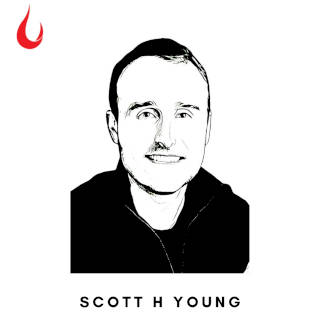
“Our time gets sucked into easy and available distractions like phones, television and social media, rather than the pursuits that actually matter.”
Young suggests a simple exercise.
- Pick an activity you wish you did more.
- Pick an activity you feel you do too much.
- Now, ask yourself how you could restrict the second activity to a narrow context. For instance, if you want to cut back on online news, you could restrict yourself to checking once in the morning. If you make this a habit, it won’t feel as obvious to check news in the evening, because they rely on different contexts.
- How could you inject the activity you’d like to do more in the time you’ve taken back?
Dig deeper
The law is an ass
We just have to go through media headlines to see how often our justice system fails people. (The Washington Post recently reported that a forensic analysis showed the evidence against the jailed Bhima Koregaon activists was planted).
The pandemic has some more examples. Here’s one from the US. The New York Times shares the story of a physician, Dr. Hasan Gokal who gave vaccines to 10 eligible people rather than let them go to waste. The outcome? He was fired and is being prosecuted.

The NYT writes: “The Texas doctor had six hours. Now that a vial of Covid-19 vaccine had been opened on this late December night, he had to find 10 eligible people for its remaining doses before the precious medicine expired. In six hours.
“Scrambling, the doctor made house calls and directed people to his home outside Houston. Some were acquaintances; others, strangers. A bed-bound nonagenarian. A woman in her 80s with dementia. A mother with a child who uses a ventilator.
“After midnight, and with just minutes before the vaccine became unusable, the doctor, Hasan Gokal, gave the last dose to his wife, who has a pulmonary disease that leaves her short of breath.
“For his actions, Dr. Gokal was fired from his government job and then charged with stealing 10 vaccine doses worth a total of $135 — a shun-worthy misdemeanor that sent his name and mug shot rocketing around the globe.”
Zeynep Tufekci, a Turkish sociologist and writer wrote on Twitter: “The doctor went above and beyond duty to make sure vaccines weren't wasted, tried every official avenue, ended up driving all over the place PLUS he got fired and charged (dismissed) and all the rest. Shameful.”
Dig deeper
If the Titanic were to sink today

(Via WhatsApp)
Tell us what you think and find noteworthy.
And if you missed previous editions of this newsletter, they’re all archived here.
Bookmark Founding Fuel’s special section on Thriving in Volatile Times. All our stories on how individuals and businesses are responding to the pandemic until now are posted there.
Warm regards,
Team Founding Fuel
(Note: Founding Fuel may earn commissions for purchases made through the Amazon affiliate links in this article.)

Founding Fuel is sustained by readers who value depth, context, and independent thinking.
If this essay helped you think more clearly, you may choose to support our work.

Founding Fuel is sustained by readers who value depth, context, and independent thinking.
If this essay helped you think more clearly, you may choose to support our work.
Founding Fuel aims to create the new playbook of entrepreneurship. Think of us as a hub for entrepreneurs- the go-to place for ideas, insights, practices and wisdom essential to build the enterprise of tomorrow. It is co-founded by veteran journalists Indrajit Gupta and Charles Assisi, along with CS Swaminathan, the former president of Pearson's online learning venture.
Loading comments...



Readers also liked

·Work, Careers & Personal Mastery
FF Daily #548: Relate to yourself, relate to the world
December 14, 2021: Everything changes everyday; How to make creative leaps; When calendars conflict
FF

Founding Fuel
FF Daily #548: Relate to yourself, relate to the world
December 14, 2021: Everything changes everyday; How to make creative leaps; When calendars conflict

·Work, Careers & Personal Mastery
FF Daily #549: The adolescent brain
December 15, 2021: What makes Elon Musk Elon Musk; Charlie Munger on human behaviour; Conflicting issues
FF
Founding Fuel
FF Daily #549: The adolescent brain
December 15, 2021: What makes Elon Musk Elon Musk; Charlie Munger on human behaviour; Conflicting issues

·Work, Careers & Personal Mastery
FF Daily #543: Parasites of the mind
December 8, 2021: Are you a victim of thinkism? Does Twitter have a business? Knowledge versus googling
FF
Founding Fuel
FF Daily #543: Parasites of the mind
December 8, 2021: Are you a victim of thinkism? Does Twitter have a business? Knowledge versus googling
Explore more
Dive into other themes from our network.