Working From Home Daily #78: Find the balance
June 9: Evaluate; create livelihoods, not just jobs; push for transparency
9 June 2020· 2 min read
TL;DR
This article offers profound insights for leaders navigating today's dynamic landscape. It compellingly argues, drawing from ancient wisdom, that a stable economy hinges on the state's ability to balance diverse interests—a function demanding transparency and proactive civic engagement. The piece then prompts a critical re-evaluation of traditional investments, exemplified by the evolving value of an MBA's physical presence and networking. Most powerfully, it advocates shifting focus from mere 'jobs' to cultivating resilient 'livelihoods.' Showcasing inspiring community-led initiatives fostering self-reliance and holistic well-being, it urges business leaders to consider broader socio-economic impact, fostering robust local ecosystems for sustainable, enduring growth.

Good morning,
In the final paragraphs of the Arthashastra, The Science of Wealth, one of the volumes in The Story of Indian Business series (edited by Gurcharan Das), Thomas R Trautmann reflects on the relevance of the ancient text by Kautilya to the modern world. He writes:
“What remains constant over the long run is the need for government to hold the balance among overlapping and sometimes conflicting ends, performing functions the market does not: a treasury adequate to the tasks of the state; an army sufficient to defend the people; social order; prosperous people with effective means of peacefully settling disputes; assistance for those who are harmed by the economic process and the rapid social change it entails.
“What the Arthashastra teaches us that is of use today is that the economy and the polity are intimately related, indeed that they are inseparable. The economy cannot exist independent of the state. The state is essential to the economy. It has the important task of making the economy work for the good of all by finding a balance among different interests. It can carry this out well or poorly, and the people must see that it is carried out well.”
Now, amidst the global crisis, each of those interests seems to demand even greater attention. Finding the balance, therefore, has turned much harder. We saw the state governments struggling with exactly that in the last few weeks and months. How do we help, nudge, force the government to find the balance—even as we fight the coronavirus—is one of the biggest challenges of our times.
Have a great day.
Evaluate
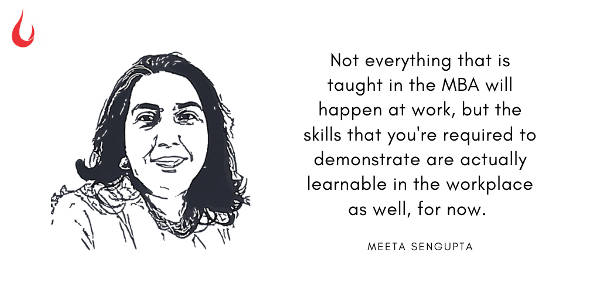
In our latest Sounding Board column, Meeta Sengupta takes us through the costs and benefits of doing an MBA now with the pandemic raging. One of the factors she would like us to consider is the value of physical presence in B-school education. She says:
Presence has a unique value in an MBA. Now your presence means your engagement in the classroom, your engagement in projects with corporates, your internships, and the way you engage and build your peer networks, because these are going to be your career networks for life. How you work with your cohort depends so much upon your physical presence, and how you exude and enable and work with that. That's going to be a bit iffy for sure in the next year or so. I would actually count that as a cost and not a benefit at this stage.
Watch Meeta Sengupta’s video
Read her column
Create livelihoods, not just jobs
In The Hindu, Ashish Kothari, founder-member of Kalpavriksh, shares some inspiring stories from rural India that highlight the true meaning of self-reliance—revitalising livelihoods with its close linkages to life, social relations, and culture. Kothari writes:
“In Kunariya village in Kutch, Gujarat, sarpanch Suresh Chhanga was able to set up a crisis management team, use social media to raise awareness about the pandemic, and organise a full health survey. The villagers ensured that 316 needy families received all basic necessities with the help of panchayat funds and local donations. When I phoned Chhanga, he excitedly recounted how the village keeps its children busy. ‘We realised that they are stuck at home, bored or even sometimes facing the aggression of anxious adults, so the panchayat has encouraged elders to teach them whatever special skills they had—music, crafts, cooking, traditional technologies, gardening.’
“All this became possible because Chhanga has enabled Kunariya villagers to achieve greater participation in local governance. He has helped build bridges between villagers and government authorities, and ensured that schemes and laws such as MGNREGA and the National Food Security Act are implemented, budgets kept transparent, and women’s voices strengthened. Now they are figuring out how to produce over 200 items of consumption locally, rather than spend Rs 40 lakh a month buying them from outside.”
Push for transparency
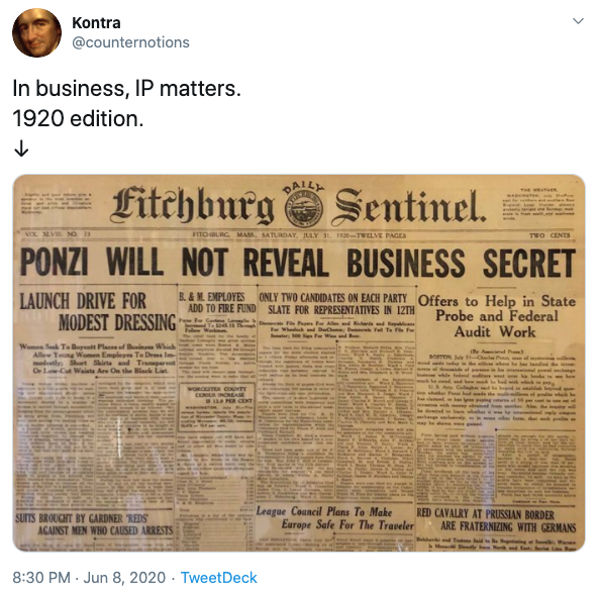
Do you like scouring old newspapers? If you find anything interesting, share it with us. Or post on Twitter, and tag us @foundingf. Or join our Slack channel and post it there. If you aren’t there already, here is the invite code.
And if you missed previous editions of this newsletter, they’re all archived here.
Bookmark Founding Fuel’s special section on Thriving in Volatile Times. All our stories on how individuals and businesses are responding to the pandemic until now are posted there.
Warm regards,
Team Founding Fuel

Founding Fuel is sustained by readers who value depth, context, and independent thinking.
If this essay helped you think more clearly, you may choose to support our work.

Founding Fuel is sustained by readers who value depth, context, and independent thinking.
If this essay helped you think more clearly, you may choose to support our work.
Join the conversation
Founding Fuel aims to create the new playbook of entrepreneurship. Think of us as a hub for entrepreneurs- the go-to place for ideas, insights, practices and wisdom essential to build the enterprise of tomorrow. It is co-founded by veteran journalists Indrajit Gupta and Charles Assisi, along with CS Swaminathan, the former president of Pearson's online learning venture.
Beyond the noise is the signal.
FF Insights: Sharpen your edge, Monday–Friday.
FF Life: Culture, ideas and perspectives you won't find elsewhere — Saturday.
Loading comments...


Readers also liked

·Economy, Policy & Society
Working From Home Daily #86: Rationalise public transport
June 17: A purpose-driven life; stagger timings for public transport; don’t panic, listen to all sides; recharge
FF

Founding Fuel
Working From Home Daily #86: Rationalise public transport
June 17: A purpose-driven life; stagger timings for public transport; don’t panic, listen to all sides; recharge
·Economy, Policy & Society
How to build Agra-cities
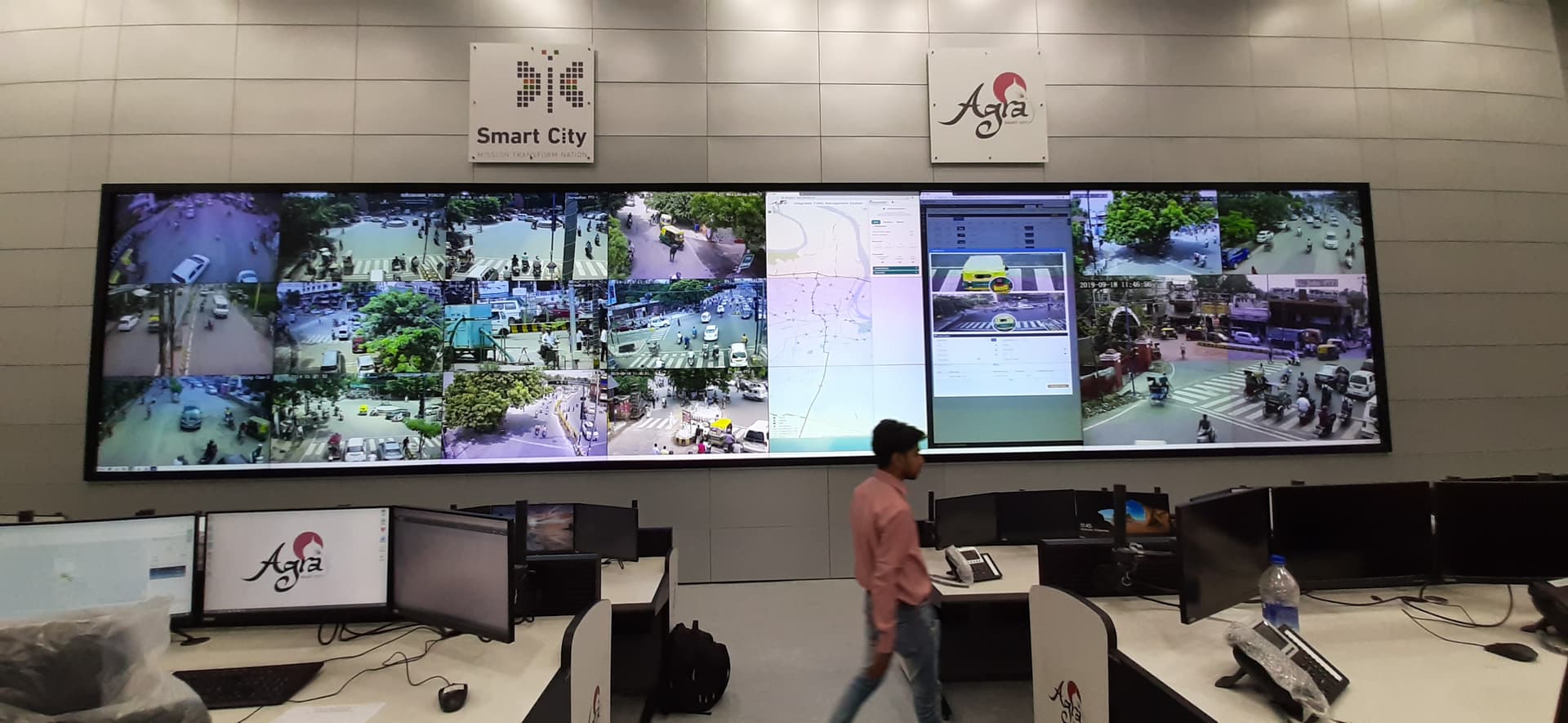
While essential services are in place, people in government managing cities are in limbo. A vast majority of state employees are in ineffective mode because they are working from home and cannot access their systems remotely. It’s time to plan digital transformation in the government.
AC

Amrita Chowdhury
Director | Gaia Smart Cities
How to build Agra-cities
While essential services are in place, people in government managing cities are in limbo. A vast majority of state employees are in ineffective mode because they are working from home and cannot access their systems remotely. It’s time to plan digital transformation in the government.
Director | Gaia Smart Cities
·Work, Careers & Personal Mastery
They chose schools for creative learning. What’s the benefit now, they ask
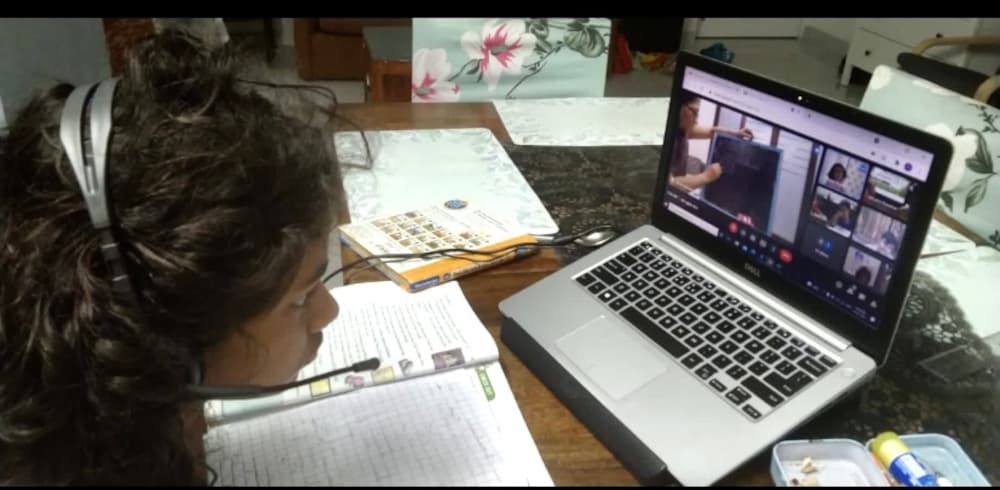
These two working moms wanted holistic development for their kids. Now they are struggling to create an at-home learning experience. Meanwhile, two nine-year-olds talk about what they miss about “real school”
PM

Piyul Mukherjee
Co-Founder | Quipper Research Private Limited
They chose schools for creative learning. What’s the benefit now, they ask
These two working moms wanted holistic development for their kids. Now they are struggling to create an at-home learning experience. Meanwhile, two nine-year-olds talk about what they miss about “real school”
Co-Founder | Quipper Research Private Limited
Explore more
Dive into other themes from our network.