Like: The Button That Changed the World
By Martin Reeves and Bob Goodson
Insights from Martin Reeves and Bob Goodson’s new book, ‘Like’
By Martin Reeves and Bob Goodson

Operating Partner | Advent International
Shivakumar is Operating Partner at Advent International. Before this, he was President (Corporate Strategy and Business Development) at Aditya Birla Group. Earlier assignments include: Chairman & CEO at Pepsico India and prior to that, Managing Director at Nokia India. Before joining Nokia, he worked with consumer electronics maker Philips and top consumer goods firm Hindustan Unilever. He is an engineer from IIT Chennai and an MBA from IIM Calcutta.
Shivakumar has written three books: Reflections - a collection of Shivs articles; The Right Choice - Resolving Ten Career Dilemmas; and The Art of Management. The latter two are business bestsellers.
FF Insights: Sharpen your edge, Monday–Friday.
FF Life: Culture, ideas and perspectives you won't find elsewhere — Saturday.

Founding Fuel is sustained by readers who value depth, context, and independent thinking.
If this essay helped you think more clearly, you may choose to support our work.

Founding Fuel is sustained by readers who value depth, context, and independent thinking.
If this essay helped you think more clearly, you may choose to support our work.
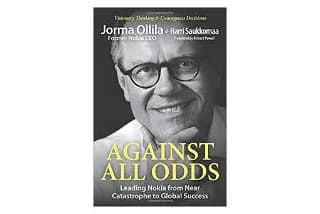
In his book ‘Against All Odds’, Nokia’s former CEO Jorma Ollila chronicles how a troubled conglomerate engaged in rubber, cable, forestry, electronics and power generation businesses became a global mobile phone behemoth, but lost out to the iPhone

D Shivakumar
Operating Partner | Advent International
In his book ‘Against All Odds’, Nokia’s former CEO Jorma Ollila chronicles how a troubled conglomerate engaged in rubber, cable, forestry, electronics and power generation businesses became a global mobile phone behemoth, but lost out to the iPhone
Operating Partner | Advent International

Flipkart and Myntra see mobile phones as a disruptive force in retail

N S Ramnath
Senior Editor | Founding Fuel
Flipkart and Myntra see mobile phones as a disruptive force in retail
Senior Editor | Founding Fuel

Insights from the book ‘Say It Well’ by Terry Szuplat, Barack Obama’s speechwriter
D Shivakumar
Operating Partner | Advent International
Insights from the book ‘Say It Well’ by Terry Szuplat, Barack Obama’s speechwriter
Operating Partner | Advent International
Dive into other themes from our network.