
Terry Szuplat on the Art of Powerful Communication
Seven takeaways from a conversation with President Barack Obama’s speechwriter
26 September 2025· 1 min read
In the second episode of our’ Meet the Author’ series, we shine a spotlight on the power of words—how great communication inspires, leads, and leaves a lasting impression. Terry Szuplat, former senior speechwriter to President Barack Obama and author of Say It Well, and business leader and author D. Shivakumar, discuss the timeless art of moving audiences to action.
Watch the 31 minute conversation above, or read the key takeaways below.
Key Takeaways (Read Time: 1 min)
1. Fundamentals of communication are universal
Whether you are a business leader, entrepreneur, or politician, the basics don’t change: know your audience, connect emotionally, and tell powerful, human stories. The context may differ, but the principles remain the same.
2. Speak from a place of conviction
Great delivery starts with authenticity. As Barack Obama told Terry, the most effective public speakers are those who know who they are, what they believe in, and speak with clarity and conviction. Audiences can sense when you don’t truly believe in your own words.
3. Listen widely. Great ideas can come from anywhere
The most memorable opening to one of Obama’s speeches came not from a senior aide but from an Australian chauffeur. Terry’s advice: don’t limit yourself to the voices at the top. Look up, down, and sideways within your organization—fresh perspectives often come from unexpected places.
4. Build humility into the creative process
When you receive feedback, don’t instinctively defend your original idea. Instead, start by assuming the critique is valid and see if you can make it work. This mindset not only improves speeches but also strengthens team collaboration and innovation.
5. Human connection matters more than technology
AI tools are powerful for research, brainstorming, and editing. But when it comes to expressing your vision and values, only a human voice can inspire and move people. In an AI-saturated world, audiences will crave authentic, human-led moments even more.
6. Find common ground to bridge divides
In an age of polarization, the words we choose matter. Terry urges leaders to move away from confrontational language and instead appeal to shared human aspirations: dignity, family, education, respect. There’s always common ground, even when it doesn’t seem obvious.
7. A great speech must lead to action
Applause is not the real measure of success. The true test of a speech—or any form of communication—is whether it inspires people to do something different: work harder, think differently, or come together for a shared goal.
Dig Deeper
- Read The Gist | Insights from the book ‘Say It Well’ by Terry Szuplat, Barack Obama’s speechwriter
- Read a Book Extract | ‘Everybody Has a Sacred Story’
Join the conversation
Founding Fuel aims to create the new playbook of entrepreneurship. Think of us as a hub for entrepreneurs- the go-to place for ideas, insights, practices and wisdom essential to build the enterprise of tomorrow. It is co-founded by veteran journalists Indrajit Gupta and Charles Assisi, along with CS Swaminathan, the former president of Pearson's online learning venture.
Beyond the noise is the signal.
FF Insights: Sharpen your edge, Monday–Friday.
FF Life: Culture, ideas and perspectives you won't find elsewhere — Saturday.

Founding Fuel is sustained by readers who value depth, context, and independent thinking.
If this essay helped you think more clearly, you may choose to support our work.

Founding Fuel is sustained by readers who value depth, context, and independent thinking.
If this essay helped you think more clearly, you may choose to support our work.
Loading comments...




Readers also liked

·Business & Strategy
What a Lasting Tata Settlement Must Resolve
Ahead of Tata Sons’ pending AGM, the fight over leadership and listing is widening. A lasting settlement must resolve who decides, how capital is used and whose interests count.
SP

Satish Pradhan
Independent Consultant
What a Lasting Tata Settlement Must Resolve
Ahead of Tata Sons’ pending AGM, the fight over leadership and listing is widening. A lasting settlement must resolve who decides, how capital is used and whose interests count.
Independent Consultant
·Economy, Policy & Society
Who Was the School Day Built For?
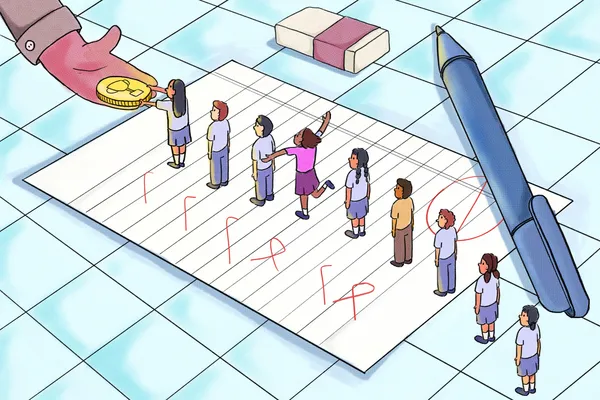
India’s school system was built to educate at scale. Its classrooms, exams and incentives reveal what that design rewards—and the individual child it struggles to see.
NA

Nandita Abraham
Founding Dean | BITS Design School, Mumbai
Who Was the School Day Built For?
India’s school system was built to educate at scale. Its classrooms, exams and incentives reveal what that design rewards—and the individual child it struggles to see.
Founding Dean | BITS Design School, Mumbai

·Leadership & Organisation
Who Owns the Fire?
A leader can light the spark. The harder question is what happens to the fire afterwards?
SP
Satish Pradhan
Independent Consultant
Who Owns the Fire?
A leader can light the spark. The harder question is what happens to the fire afterwards?
Independent Consultant
Explore more
Dive into other themes from our network.