The Best of FF Life 2025
11 stories that asked us to slow down, look closer, and feel more deeply
19 December 2025· 4 min read
TL;DR
Founding Fuel’s "Best of FF Life 2025" offers a compelling call for business leaders to intentionally slow down, look closer, and engage more deeply. This curated collection champions the idea that profound insights and meaning often arise not from constant forward drive, but from deliberate attention to often-overlooked details, relationships, and broader societal contexts. For leaders, this translates into an indispensable approach for strategic clarity, fostering innovation, and cultivating empathy within dynamic environments. By valuing thoughtful inquiry over quick answers, the collection offers a powerful framework to develop more holistic leadership, encouraging a human-centric perspective that uncovers valuable nuances beyond conventional business metrics.

As the year draws to a close, we’re sharing The Best of FF Life 2025—stories we hope you’ll return to slowly. These are stories to linger with. To reread. Perhaps with a blanket, a cup of something warm, and a little more time to think.
At Founding Fuel, we’ve made a deliberate choice to keep our work open to all. Not because it’s easy—but because we believe ideas travel further, and matter more, when they are shared freely.
If Founding Fuel has been part of your reading life this year—if you’ve paused with a story, shared one with a friend, or found a conversation that stayed with you—we invite you to consider making a generous contribution.
Not as a subscription.
Not as a paywall.
But as a quiet gesture of belief in thoughtful, independent work.
Either way, thank you for reading. We’ll be taking a short break from December 24, and we look forward to being back with you in the New Year on January 5, 2026.
Warm holiday wishes,
The Founding Fuel editors
Best of FF Life 2025
This year’s best stories linger on places that shaped us, relationships we underestimate, technologies we misunderstand, and choices we avoid until we can’t. Together, they capture what FF Life does best: They slow us down. They look sideways rather than straight ahead. And they remind us that meaning is often found not in answers, but in attention—to places, people, and moments we might otherwise pass by.
On Belonging, Faith, and the Idea of India
We, the People of India
By Vinita Gursahani Singh; Read Time: 8 mins
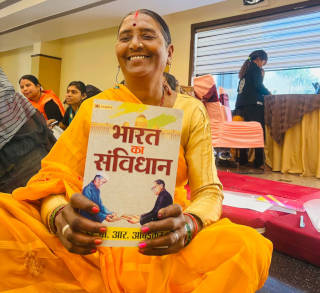
This essay revisits the constitutional promise of India not as a legal abstraction, but as a lived, breathing idea—contested, fragile, and worth returning to. What makes it special is its tone: reflective rather than polemical, grounded in civic memory rather than outrage. It reminds us that belonging is something we must actively practice, not merely inherit.
Beyond the Gate of Conquest
By Charles Assisi; Read Time 6 min
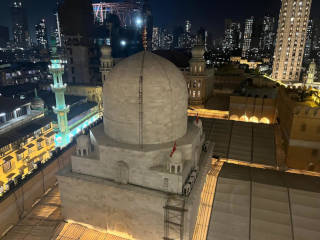
Set during Ramzaan at the Saifee Masjid complex, this piece uses a single, intimate setting to explore pluralism, devotion, and shared civic space. Its power lies in observation—how ritual, architecture, and everyday kindness quietly counter the louder narratives of division. A story about faith that speaks equally to believers and non-believers.
12 Places That Helped Shape Post-Independence India
By the FF Community; Read Time 19 mins
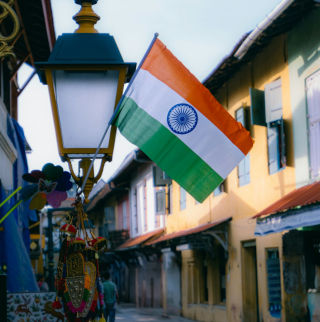
Across India, there are places where history, culture, and resilience come alive—not in monuments alone, but in spaces still bustling with life.
This story is a curated travelogue of 12 places that have quietly shaped post-Independence India—through books, science, food, worker cooperatives, refugees, craft, education, sport, the military and more.
Instead of the usual monuments, it picks working institutions and communities—Connemara Library, Sriharikota, MSSRF, The Indian Coffee House, Bylakuppe, Indian Institute of Advanced Study, La Martiniere, LLDC Kutch, Turtuk, Birsa Munda International Hockey Stadium, National Defence Academy, and Udupi—that show how ideas, experiments and everyday labour built the republic.
On Nature, Wilderness, and What We Are Losing
Reconnecting with the Outdoors
By Ashok Nair; Read Time: 9 mins

Ashok stepped out of a 30-year corporate career to follow his passion of wildlife photography. Here he dwells on the joy of being in nature and a journey of discovery—of a world outside and within. He shares five of his favourite places to experience Earth’s remarkable landscape.
At a time when nature is increasingly consumed as content, this piece urges a more mindful return—to walking, noticing, and listening. Its strength lies in resisting spectacle, reminding readers that the outdoors is not an escape from life but a way back into it.
In the Heart of the Serengeti
By Shrinath V; Read Time: 9 mins
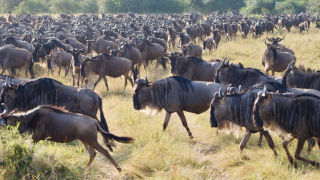
More than a travelogue, this story is a meditation on scale—of time, the “endless plain”, ecosystems, and human presence. It balances awe with humility, allowing the Serengeti to unsettle our assumptions about control and predictability.
On the Edge: Urgent Stories Our Wild Places Tell — A Tribute to Ramki
By NS Ramnath; Read Time: 5 mins
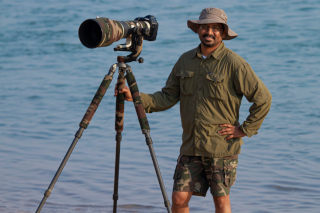
One tends to think that nature photography is all about pretty pictures, but this tribute to Ramki Sreenivasan made us realise there are many layers to it.
Ramki was a widely admired voice in India’s wildlife conservation movement, a passionate photographer, and a long-time contributor to Founding Fuel. This tribute blends reportage on the Ramki Sreenivasan Conservation Photography Award, with memory and moral urgency: The Award—a dedicated category within the Nature inFocus Photography Contest—encourages photographers to document uncomfortable truths. Not beauty alone. Not a spectacle. But photographs that expose our impact on the natural world, provoke discomfort, stir empathy, and plant the seed of action.
On Journeys, Maps, and Brotherhood
Where GPS Fails, the Brotherhood Begins
By Charles Assisi; Read Time: 10 mins
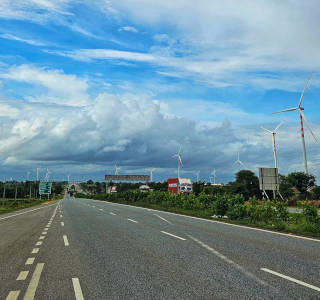
This story follows a Mumba-Kochi road trip where GPS fails and a hidden human network quietly takes over.
It reveals an underground brotherhood of road-warriors who act as live “human algorithms”, blending maps, lived experience and hyperlocal contacts (dhaba owners, truckers, shopkeepers) to guide others safely and efficiently across India.
Digital maps optimise for shortest distance; this brotherhood optimises for lived reality—road quality, safety, social mood—proving that, when satellites shrug, trust and human intelligence still matter more than code.
Dig Deeper: Maps, History, and Finding the Throughline
AI-driven, multi-layered maps could change how we understand power, culture, and the choices future generations will inherit, writes Shrinath V. Read Time: 5 mins
On Work, Technology, and the Inner Life
AI’s Best-Kept Secret: It’s Not the Tools, It’s You
By Anmol Shrivastava; Read Time: 14 mins
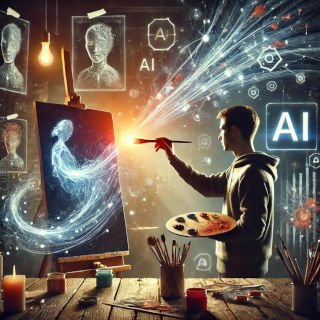
How does one keep learning in an area that is changing quickly? This article is not about the AI tools—which are evolving very rapidly—but about a learning approach that helps one stay in step.
It insists that judgment, curiosity, and intent matter more than prompts or platforms. It treats AI not as magic, but as a mirror—revealing how we think, decide, and learn.
On Love, Care, and Difficult Choices
What Quiet Men Teach Us About Love
By Charles Assisi; Read Time: 4 mins
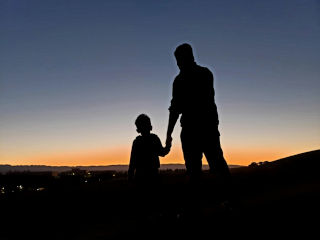
This is a reflective essay on how men learn, struggle with, and slowly relearn the language of love. It honours forms of masculinity that rarely make headlines—steadfast, unshowy, emotionally present.
It examines how many men process grief more in their heads than in words—and often feel compelled to appear strong, which can look like being emotionally distant. And that grief transforms from pain into understanding, and how quiet men discover that silence can carry love, even as they yearn to say the words out loud.
Who Gets to Decide What Happens at the End of Your Life?
By Sveta Basraon; Read Time: 9 mins
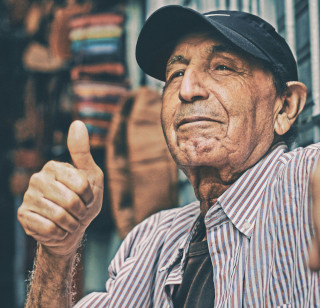
One of the year’s most necessary stories, this piece brings clarity and compassion to the idea of living wills in India. It holds law, medicine, culture, and emotion in the same frame—normalising a conversation many families postpone until it’s too late.
It explains how India’s law now allows competent adults to record their wishes on life-sustaining treatment and appoint healthcare representatives, so doctors and relatives are guided by the person’s own values rather than default “do everything” ICU protocols or family conflict.
Dig Deeper: AMA on Understanding the Living Will with Dr. RK Mani, Dr. Roopkumar Gursahani and Rituparna Padhy. (On YouTube)
How My Family Health Crisis Forced Me to Rethink the Value of Insurance
By Deven Pabaru; Read Time: 17 mins
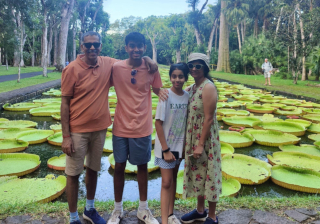
This deeply personal account cuts through jargon to reveal what insurance truly means when theory meets crisis. It’s a first person account of how a
sudden, severe health crisis in the author’s family exposed just how under-prepared they were on health insurance—and what it took to fix that.
It shows how one ICU event can upend middle-class finances, then walks through how Deven systematically reassessed risk, upgraded a basic family floater with top-ups and add-ons, and built a customised, disclosure-heavy cover using hospital benchmarks and policy-comparison tools.
Join the conversation
Founding Fuel aims to create the new playbook of entrepreneurship. Think of us as a hub for entrepreneurs- the go-to place for ideas, insights, practices and wisdom essential to build the enterprise of tomorrow. It is co-founded by veteran journalists Indrajit Gupta and Charles Assisi, along with CS Swaminathan, the former president of Pearson's online learning venture.
Beyond the noise is the signal.
FF Insights: Sharpen your edge, Monday–Friday.
FF Life: Culture, ideas and perspectives you won't find elsewhere — Saturday.

Founding Fuel is sustained by readers who value depth, context, and independent thinking.
If this essay helped you think more clearly, you may choose to support our work.

Founding Fuel is sustained by readers who value depth, context, and independent thinking.
If this essay helped you think more clearly, you may choose to support our work.
Loading comments...



Readers also liked

·FF Life
The best of FF Life in 2024
Nine stories that took us close to Frida Kahlo’s art; inside the best Durga Puja pandals; the most memorable moments from the Lok Sabha elections; into the world of graphic novels; a trek to Sandakphu near Darjeeling; and Ramzaan in South Mumbai’s Bhendi Bazaar
FF

Founding Fuel
The best of FF Life in 2024
Nine stories that took us close to Frida Kahlo’s art; inside the best Durga Puja pandals; the most memorable moments from the Lok Sabha elections; into the world of graphic novels; a trek to Sandakphu near Darjeeling; and Ramzaan in South Mumbai’s Bhendi Bazaar

·FF Life
The best of FF Life so far in 2023
17 June 2023: Work and life are not separate, discrete compartments
FF
Founding Fuel
The best of FF Life so far in 2023
17 June 2023: Work and life are not separate, discrete compartments

The best of FF Life 2022
December 26, 2022: Explore, learn, and play
Explore more
Dive into other themes from our network.