Noticing: The Forgotten Skill of a Modern Life
The future changes when someone pauses long enough to ask a simple question: Why?
Kavi Arasu
Works at the intersection of people, systems, and organisational change

Works at the intersection of people, systems, and organisational change
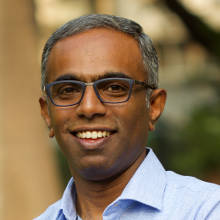
Kavi Arasu works at the intersection of people, systems, and organisational change. His work has taken him across multinational corporations and high-growth enterprises in India and internationally, giving him a grounded view of how transformation actually plays out, as opposed to how it gets described in strategy decks.
Over the last decade, his work has centred on partnering with CEOs and senior leadership teams through business transitions, digital transformation, and cultural change. He has supported leadership transitions, post-M&A cultural integration, and the kind of long-term stewardship of values that rarely gets noticed until it's missing. AI is now one strand of that work. Leaders are trying to work out what it changes and what it doesn't, and that question sits comfortably inside the change problems he has spent decades on.
He runs Flyntrok, an advisory practice built around change challenges that rarely arrive with instructions. He also teaches at a leading business school and speaks at leadership forums internationally. He used to run long distances. These days he runs Flyntrok instead, which he maintains is no less demanding.
He works very closely with the core team at Founding Fuel on learning and change initiatives and is a regular contributor. He lives in Mumbai, a city he finds well suited to thinking clearly amid constant motion.

The future changes when someone pauses long enough to ask a simple question: Why?
Kavi Arasu
Works at the intersection of people, systems, and organisational change

What happens when progress stops asking for permission?
Kavi Arasu
Works at the intersection of people, systems, and organisational change

As work becomes less visible, the systems used to measure it are starting to fail—and expose what they were really rewarding
Kavi Arasu
Works at the intersection of people, systems, and organisational change

What looks like motivation—war footage, heroic narratives, calls to crush the competition—is often something else entirely: a system of thinking that rewires how organisations see markets, customers, and themselves
Kavi Arasu
Works at the intersection of people, systems, and organisational change

When producing things is mistaken for thinking: AI hasn’t created this habit—it has simply made it faster and harder to spot. Revealing the gap between output and judgement inside organisations
Kavi Arasu
Works at the intersection of people, systems, and organisational change

Why the real risk in the return-to-office debate isn’t resistance, but the quiet erosion of judgement and capability
Kavi Arasu
Works at the intersection of people, systems, and organisational change

How small everyday choices shape cultures, organisations, and the societies we become
Kavi Arasu
Works at the intersection of people, systems, and organisational change

In an age of noise, overload and drifting meetings, facilitation is no longer a “tool”, it’s a core leadership discipline
Kavi Arasu
Works at the intersection of people, systems, and organisational change

At a quiet Australian headland, I discovered that the most meaningful journeys aren’t about how far we go—but how still we learn to be
Kavi Arasu
Works at the intersection of people, systems, and organisational change

Inspired by Brisbane’s “Vibrantly Vacant” windows—on how renewal begins in life’s pauses
Kavi Arasu
Works at the intersection of people, systems, and organisational change

In a world of echo chambers, courage and curiosity keep us honest
Kavi Arasu
Works at the intersection of people, systems, and organisational change

AI can speak in dozens of tongues — but often thinks in just one. Why India must lead in building systems fluent in its own realities
Kavi Arasu
Works at the intersection of people, systems, and organisational change

Leadership conversations are increasingly about what can be measured and instant results. Yet, many of the most powerful shifts in leadership show up quietly
Kavi Arasu
Works at the intersection of people, systems, and organisational change

As the machines are advancing relentlessly, do we let AI think for us, or do we stay actively human?
Kavi Arasu
Works at the intersection of people, systems, and organisational change

Are you adapting, exploring, or waiting for change to push you forward?
Kavi Arasu
Works at the intersection of people, systems, and organisational change

Rather than fighting the use of AI in the classroom, it’s time to reimagine the real goals of learning and teaching
Kavi Arasu
Works at the intersection of people, systems, and organisational change

As the national lockdown gradually ends across China and the Far East, many professionals are starting to pick up the pieces of their lives and getting back to work. But it isn’t quite the same again.
Kavi Arasu
Works at the intersection of people, systems, and organisational change

We’ve pitchforked into action without any process or an established way of working. As a leadership team, what can we do right now to handle this disruption and help settle things down inside our enterprise?
Kavi Arasu
Works at the intersection of people, systems, and organisational change

Three learnings from the annual conference of the Society of Human Resource Management: Who do you hire, why space for dissent is an important part of dialogue, and knowing what you are not working on
Kavi Arasu
Works at the intersection of people, systems, and organisational change

Like in sport, in business too a coach can hold the space and engage a star player to sort out his game when going through a rough patch
Kavi Arasu
Works at the intersection of people, systems, and organisational change

Hard work is the base, but doing the same thing many times over will not help you solve a problem or master a new skill
Kavi Arasu
Works at the intersection of people, systems, and organisational change